Pacific technicians sharpen skills for stronger weather services
A central theme of the forum is helping participants transition from reactive troubleshooting to structured system understanding and independent problem-solving.
Tuesday 22 September 2026 | 15:00

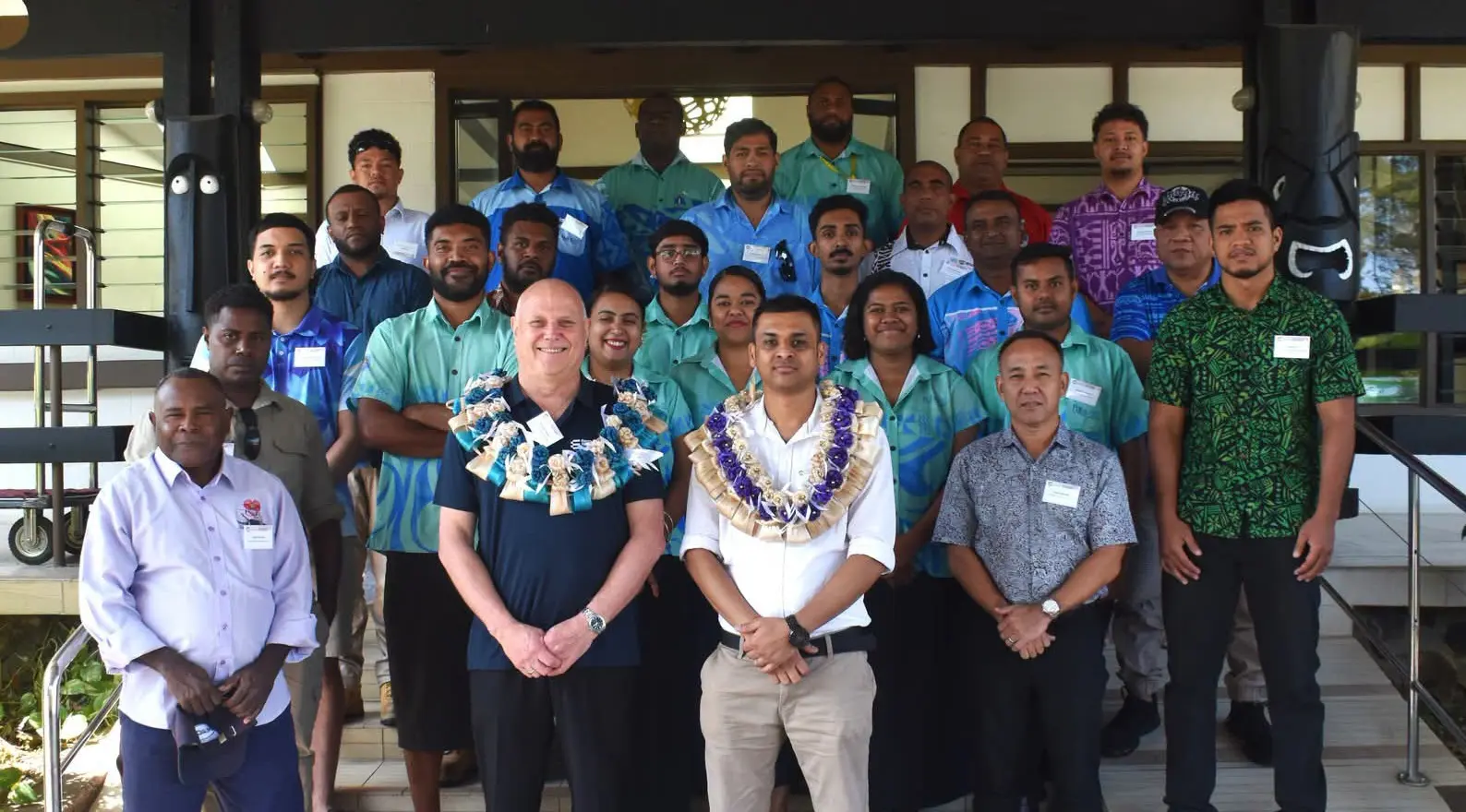
Earth Sciences New Zealand Principal Technician – Climate Andrew Harper with participants of the Pacific Meteorological Technicians Forum 2026 in Nadi.
Photo: Supplied
Meteorological technicians attending a regional forum in Nadi are being encouraged to shift from simply fixing equipment faults to developing a deeper understanding of how weather observation systems operate.
The Pacific Meteorological Technicians Forum 2026 (PMT-TEWO 2026) is bringing together technicians from across the region to strengthen their knowledge of Automatic Weather Station (AWS) systems and build capacity for independent diagnosis and better system management.
The five-day workshop, supported by the Weather Ready Pacific Programme and Earth Sciences New Zealand (ESNZ), focuses on developing technical expertise that can be applied across different weather observation platforms.
Related stories
Opening the event yesterday, Earth Sciences New Zealand Principal Technician-Climate Andrew Harper said effective observation systems rely on more than just equipment maintenance.
“Observation systems only deliver value when they are properly sited, correctly configured, well maintained, effectively monitored and competently diagnosed when faults occur,” Mr Harper said.
He said the training aims to strengthen technicians' capabilities through a deeper understanding of AWS architecture, improved diagnostic reasoning and stronger operational practices.
A central theme of the forum is helping participants transition from reactive troubleshooting to structured system understanding and independent problem-solving.
Through hands-on exercises, troubleshooting scenarios and regional knowledge sharing, participants are exploring how sensors, dataloggers, power systems, communications equipment and data management systems interact to produce reliable weather and climate observations.
While weather stations vary between countries and manufacturers, organisers say the underlying principles remain the same, enabling technicians to apply their skills across different systems.
The programme highlights the often unseen but critical role technicians play in ensuring accurate information reaches forecasters and decision-makers, helping deliver more effective weather services and safer communities across the Pacific.