Rarawa Hails From A Long Line Of Masi Artisans
Ulamila Rarawa, 59, sits by the door of her home, her hands moving steadily as she dabs paint on a Fijian masi or tapa.
Sunday 06 March 2022 | 12:00
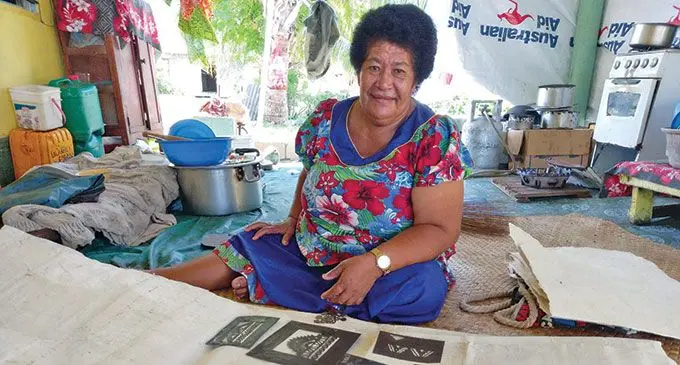
Ulamila Rarawa, 59, sits by the door of her home, her hands moving steadily as she dabs paint on a Fijian masi or tapa.
One can tell that she has frequently done this. She takes her time to make sure the paint she dabs on the masi is done the way she has imagined.
Hailing from a long line of tapa artisans from the village of Nasau in Moce, Lau, the mother of five children proudly explained how the skills of masi making and printing have been passed down to women folk through generations.
Related stories
“We plant masi, we make masi and we print masi and we sell them to our customers in Suva,” she said.
“Masi making isn’t very hard work. It takes nine months for a mulberry plant to mature and we can make masi in a day. If the sun is out, we can beat the bark of the tree, dry the masi in a day and then we bury it on the same day to start printing it the day after.”
She said the tapa they make are for special occasions, like weddings and birthdays and most of their orders are from Suva.
Ms Rarawa has been making tapa for the past 32 years.
“Masi making is the main source of income for my family. We plant and fish, but the money we get from masi making is much quicker. I make masi in two days and then it is sold on the third day,” she said.
She said compared to the past, children now leave the village for further education in Viti Levu and they never return and no longer learn the skills of masi making.
She said as they grew up, upon leaving school they were taught masi making and its knowledge has been passed down from one generation to another.
“This is the type of knowledge that needs to be kept and passed down to the next generation.
“It is important that our tradition and culture are well kept so it is never forgotten.
“It is our identity, and our identity must be protected.
“If you don’t protect it then who will,” she added.
Feedback: wati.talebula@fijisun.com.fj