Scientists test mite, beetle against invasive African tulip tree
Two agents remain under strict containment as scientists assess safety
Friday 28 August 2026 | 15:00
Updated 28 August 2026 | 16:37 FJT

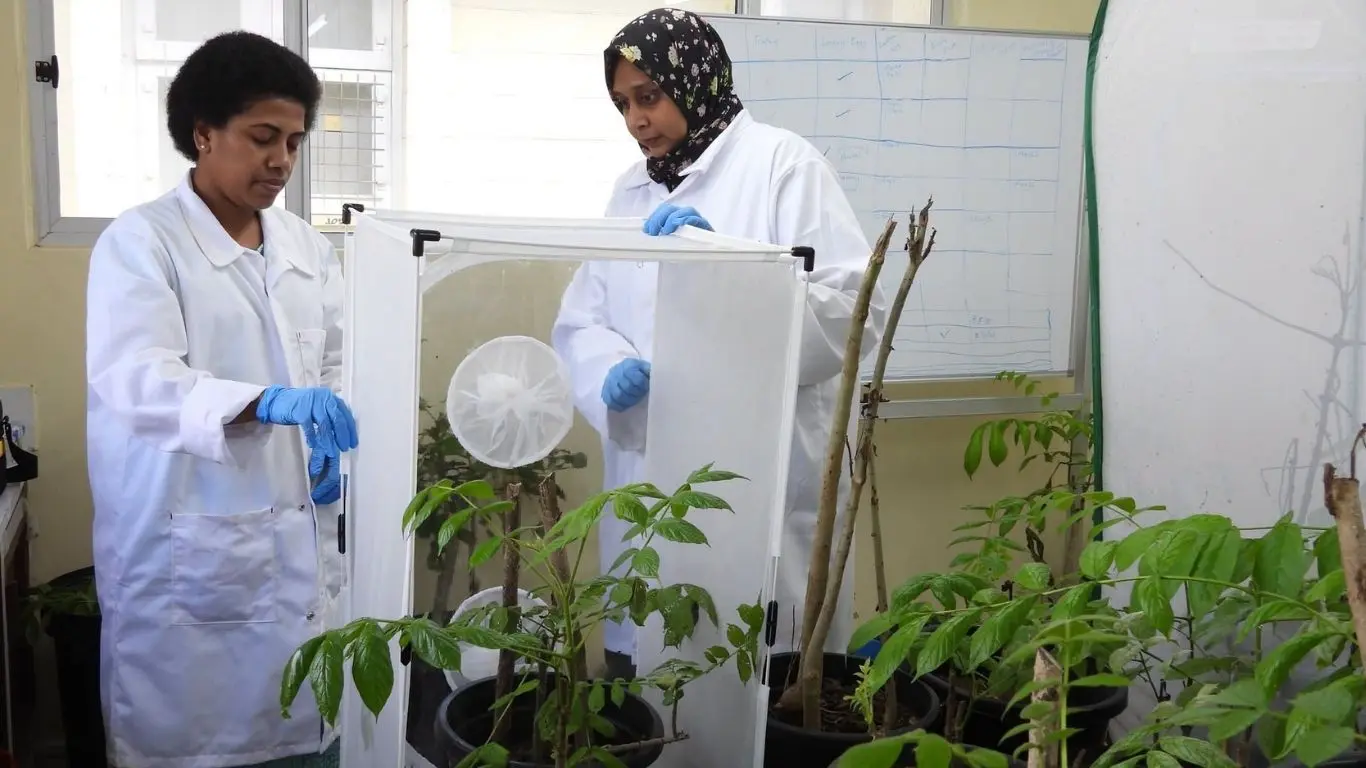
Fiji is testing a mite and a beetle as potential biological controls for the invasive African tulip tree.
Photo: Ministry of Agriculture and Waterways
The Ministry of Agriculture and Waterways is researching two biological control agents that could offer a long-term solution to the spread of the invasive African tulip tree in Fiji.
The Ministry confirmed that the gall-forming mite Colomerus spathodeae and the leaf-mining flea beetle Paradibolia coerulea are being maintained under strict containment at the Koronivia Research Station while scientists assess their effectiveness and environmental safety.
In a ministry statement, director Research and Agriculture Scientific Services Dr Shalendra Prasad said the research was progressing under stringent biosecurity conditions approved by the Biosecurity Authority of Fiji (BAF).
Related stories
“The research is being undertaken under strict containment and in accordance with the conditions set by BAF,” Mr Prasad said.
“At this stage, there has been no uncontrolled field release of either biological control agent.”
The African tulip tree is widely regarded as an invasive species that competes with native vegetation and can spread rapidly across landscapes.
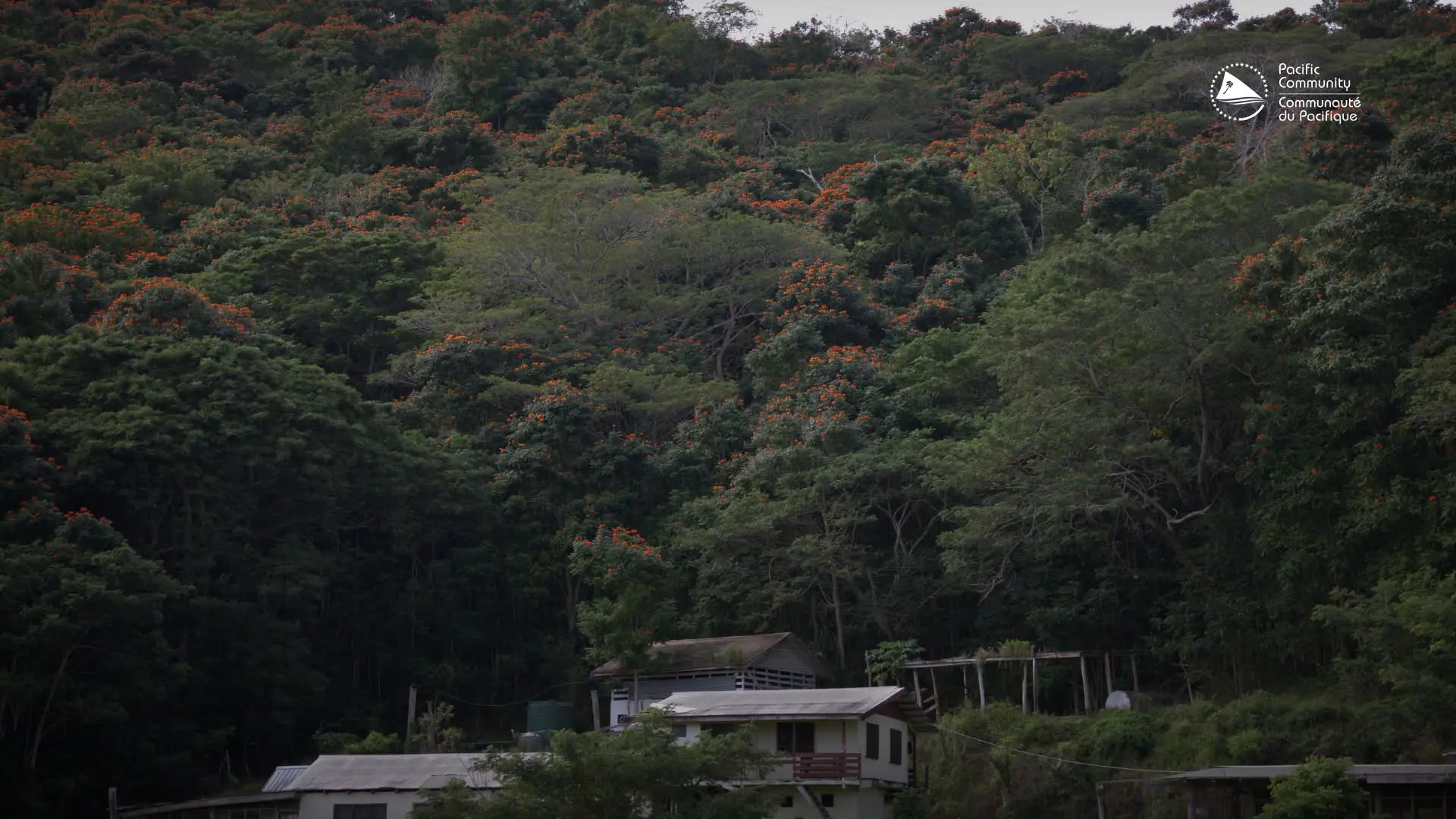
Invasive African Tulip trees.
Photo: Pacific Community
According to the Ministry, preliminary host-specificity testing has shown both agents have a strong preference for African tulip plants, with no adverse impacts observed on non-target species assessed so far.
Researchers have completed the first round of testing and begun a second round involving additional plant species from the Bignoniaceae family and other related plant groups important to agriculture and forestry.
Mr Prasad said biological control could provide a sustainable management option, but only if supported by strong scientific evidence.
A comprehensive research report will be submitted to BAF before any decision is made on a possible field release.
The Ministry confirmed that both biological control agents remain in stable condition within the BAP.
Approximately 120 adult Paradibolia coerulea beetles were initially brought from New Zealand, with at least 30 per cent of the original adults remaining alive and continuing their life cycle under containment.
The beetles have successfully completed their first and second generations, with approximately 850 additional beetles emerging to date.
The gall mite, Colomerus spathodeae, is slowly establishing within the BAP.
Visiting experts also observed that gall mites appear to be present on African tulip seedlings raised at the station for feeding purposes, suggesting a possible self-introduction. A similar scenario has previously been noted in Samoa.
Field assessments undertaken in Viti Levu and parts of Vanua Levu have also found gall mites to be widespread on different parts of African tulip plants.