UniFiji urges inclusive constitutional review
Professor Shameem says the Government must listen to public submissions and promote ethnic inclusion as it prepares the next draft of Bill No. 32.
Tuesday 27 October 2026 | 13:00

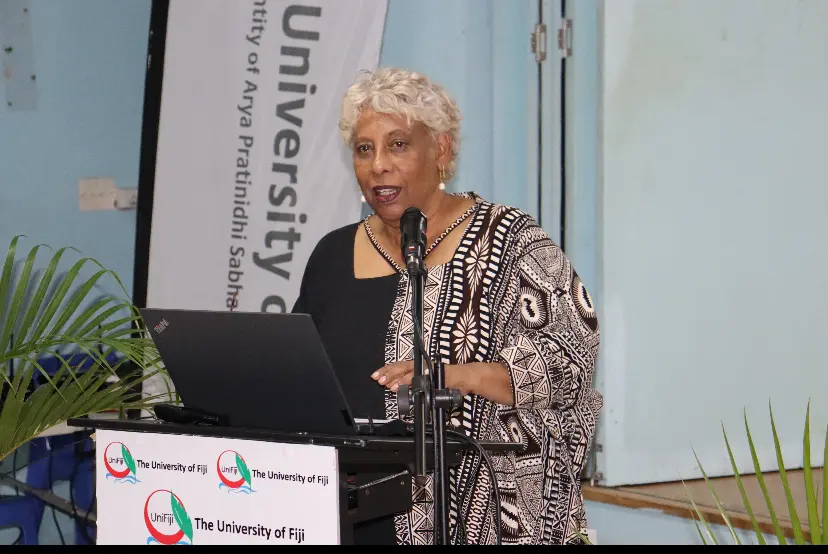
The University of Fiji has urged the Government to restore public trust by listening to Fijians and promoting ethnic inclusivity in the constitutional review process.
In a statement marking United Nations Day on October 24, Professor Shameem said the Government should uphold the principles of dialogue, equality and peaceful coexistence as it considers public submissions on Bill No. 32 before preparing the next draft.
She said the Government faced the challenge of balancing competing public views, time constraints and possible policy differences among coalition partners, but stressed that every voice in Fiji remained significant.
Related stories
“The inability to meaningfully amend the current draft of the Bill will leave most people dissatisfied with the process and its implications for trust,” Ms Shameem said.
She urged the Government to take heed of United Nations Secretary-General António Guterres’ message for United Nations Day 2026, which calls on countries to prioritise dialogue over division, cooperation over confrontation and solidarity over fear.
Ms Shameem also pointed to Kenya and India as examples of countries whose approaches to national identity and inclusion, in her view, offer lessons for Fiji’s multi-ethnic society.
She cited Kenya’s recognition of its Kenyan-Asian community, known as the Muindi, as its 44th tribe, saying the designation aims to strengthen the community’s participation in public life and acknowledge its historical contributions to the country.
She also referred to India’s approach to indigenous identity, arguing that the country’s complex civilisational history demonstrates the need to consider national identity beyond narrowly defined categories.
Ms Shameem said inclusive policies should promote genuine partnership and equitable access to national resources rather than force minority communities to assimilate into dominant populations.
She warned that assimilation would conflict with international protections against discrimination, particularly those safeguarding linguistic and cultural minorities.
“Linguistic and cultural minority groups are protected by international law; the importance of language as the window into culture cannot be under-rated,” she said.
The University of Fiji’s statement also called for fundamental principles contained in the preamble of the United Nations Charter, including human dignity, equal rights, justice, tolerance and peaceful coexistence, to be reflected in Fiji’s Constitution.
Ms Shameem said the call was particularly relevant given Fiji’s longstanding relationship with the United Nations through decades of peacekeeping service and the ongoing public submissions to the Special Constitution Committee, chaired by the Prime Minister.
She said the Government should listen carefully to concerns raised during the hearings, particularly those of young people, as it considers the future direction of the country’s constitutional framework.
The 2026 United Nations Day theme, “Restore trust, manage transformation and deliver for all”, provides a timely reminder, she said, that public confidence depends on governments listening to citizens and ensuring national policies serve everyone.
Ms Shameem urged the Government to use the occasion to reaffirm its commitment to inclusive governance, respect for human rights and the principles of the United Nations Charter.