Pacific needs 90,000 aviation professionals over next 20 years
Young Fijians urged to explore careers ranging from engineering and air traffic control to airport management and aviation security.
Friday 21 August 2026 | 14:00
Updated 21 August 2026 | 15:15 FJT

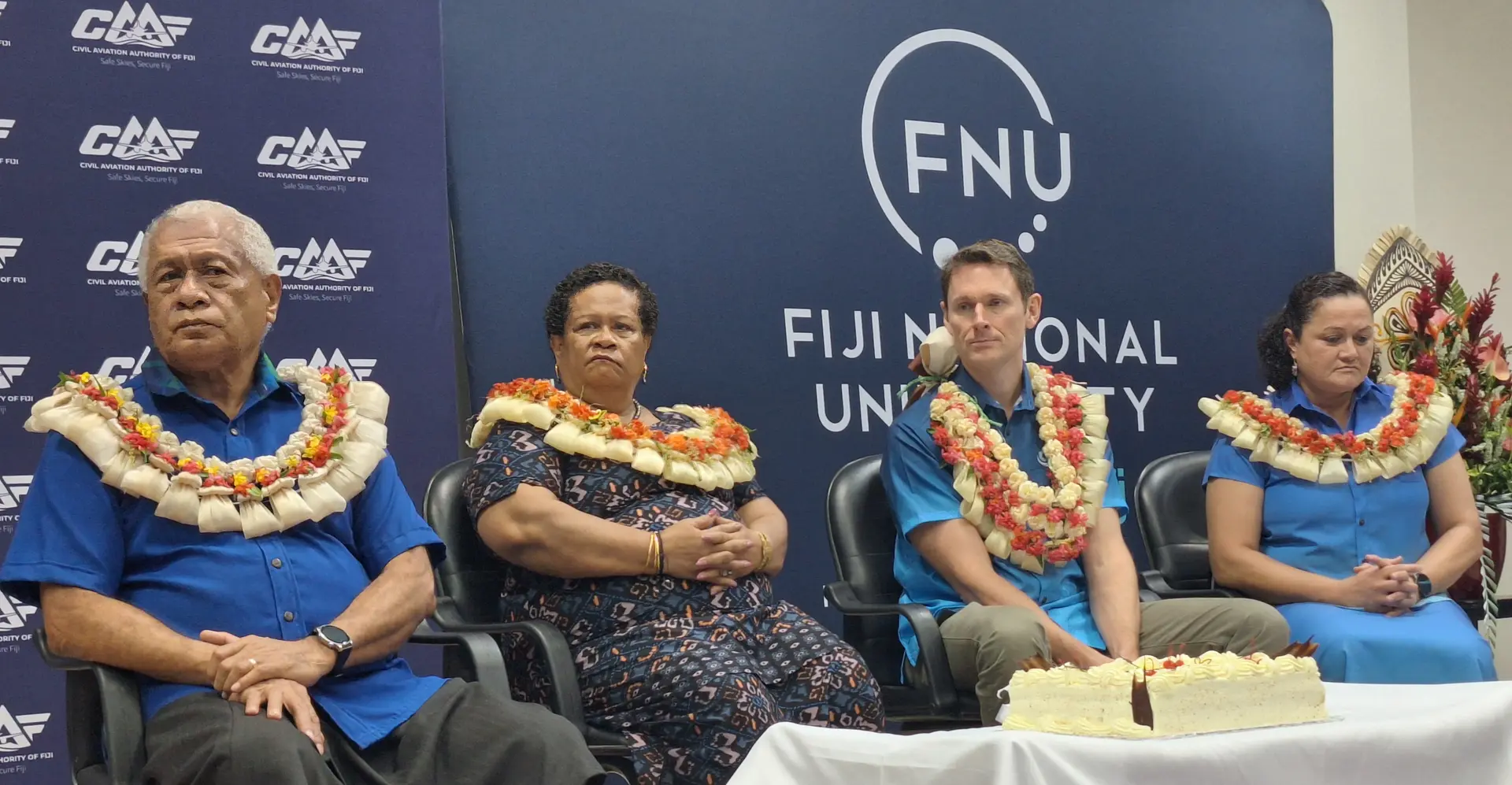
From left: CAAF board chair Anare Jale, Fiji National University Vice Chancellor Professor Unaisi Nabobo-Baba, Australia-Pacific Partnerships for Aviation executive director James Ramsey and CAAF chief executive officer Theresa Levestam.
Photo: Waisea Nasokia
The Pacific region will need about 90,000 new aviation professionals over the next 20 years, creating significant opportunities for young Fijians, says Australia-Pacific Partnerships for Aviation (P4A) Executive Director James Ramsey.
Speaking at the CAAF/FNU Beyond the Skies Aviation Open Day in Nadi today, Mr Ramsey said the global aviation sector was facing a serious shortage of skilled professionals, with the International Civil Aviation Organisation (ICAO) forecasting a need for more than 2.5 million new aviation personnel over the next two decades.
He said the Pacific alone was projected to require about 90,000 aviation professionals during the same period.
Related stories
“This is both a challenge and an opportunity. Fiji, the region and the world need you,” Mr Ramsey said.
He said the aviation industry offered a wide range of careers beyond piloting, including aircraft engineering and maintenance, air traffic control, aviation security, safety inspection, airport management, aviation law, commercial management, flight dispatch and cargo management.
Mr Ramsey said Fiji was well placed to help meet the regional workforce demand because of its established aviation infrastructure and training capabilities.
He highlighted Fiji Airways’ international network, Nadi Airport’s role as a major Pacific air transport hub, Fiji Airways Aviation Academy and Fiji Airports’ air navigation services.
He said Fiji also had strong regulatory capabilities and was a leading voice in regional discussions on aviation safety oversight, climate resilience and air connectivity.
“It’s because of its centrality to the region that Fiji is a key partner to Australia in the Australia-Pacific Partnerships for Aviation program,” he said.
Mr Ramsey said Australia was supporting efforts to strengthen aviation safety, reliability and sustainability across the Pacific.
At Fiji National University, the programme is working with Fiji to develop the Pacific Centre of Aviation Studies into a regional centre of excellence for aviation training.
Australia is also supporting aviation education through the Australia Awards Pacific Scholarships Programme, which provides scholarships in aircraft maintenance engineering and aviation management to Fijian and Pacific students.
Mr Ramsey said the aviation sector also needed to increase women’s participation, particularly in leadership and technical roles.
He encouraged students to speak directly with aviation professionals and learn about their career paths.
“Be curious, be bold, imagine a future in this industry,” he said.
“Aviation is an opportunity to build a career in an exciting, challenging and absolutely indispensable industry, an industry in which Fiji is well positioned to remain a leader.”