Island cooperative trained to turn trash into cash
Deputy Prime Minister says recycling can generate jobs and income for rural communities while protecting Fiji's natural resources.
Monday 02 November 2026 | 17:30

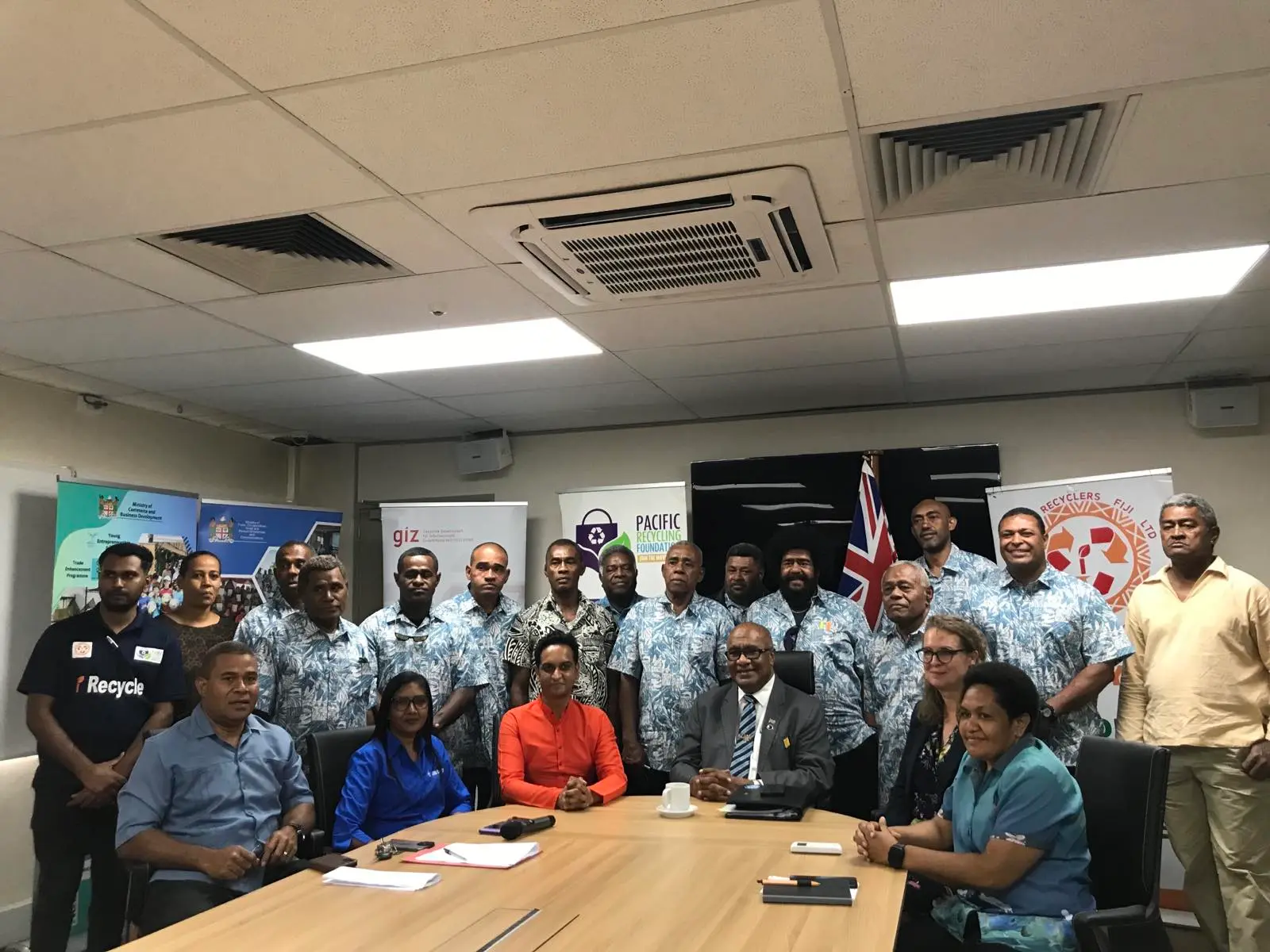
Ashok Transport Pte Limited Chief Operations Officer (Nita Narayan), Pacific Recycling Foundation Founder (Amitesh Deo), Deputy Prime Minister and Minister for Industry, Commerce and Business Development (Manoa Kamikamica), GIZ Representative in the South Pacific and Head of Project CleanSeas (Frauke Bartels) with the members of the cooperative members of the Nasomo Yalo Vata Cooperative Limited at the Civic Tower in Suva on November 2, 2026.
Photo: Lavenia Waqanivanua
A 14-member cooperative in Taveuni is receiving training in financial management and recycling to turn recyclable waste into income-generating opportunities while helping address the island’s waste management challenges.
The Nasomo Yalo Vata Cooperative Limited is undergoing a week-long programme covering financial literacy, governance and practical recycling under the Taveuni Waste Management Initiative.
Speaking at the Financial Literacy Training Programme at Civic Tower in Suva today, Deputy Prime Minister and Minister for Industry, Commerce and Business Development Manoa Kamikamica said waste management should no longer be viewed solely as an environmental issue, but also as an opportunity for economic and community development.
Related stories
He said recyclable materials, which were often treated as waste, could create income-generating opportunities for communities while protecting natural resources.
"What makes the Nasomo Yalo Vata Cooperative particularly significant is its focus on recycling and waste management," Mr Kamikamica said.
He said the cooperative movement could strengthen livelihoods by bringing people together to pool resources, share responsibilities and work towards common economic and social goals.
Mr Kamikamica said financial literacy was fundamental to the success of any cooperative, with members needing to understand budgeting, record-keeping, investment planning and responsible financial management.
The Government wanted to see strong, active and sustainable cooperatives that created employment, generated income and made a difference in the lives of their members, he said.
Pacific Recycling Foundation founder Amitesh Deo said the programme was designed to empower the 14 cooperative members to lead the recycling initiative in Taveuni and ensure it could be sustained for several years.
He said the programme would involve collecting recyclable materials from schools and resorts before transporting them to established recycling programmes in Viti Levu for processing.
"The main idea is because none of us are in Taveuni, we wanted to empower the cooperatives. So there's a 14-member cooperative who will lead the recycling initiative in Taveuni," Mr Deo said.
He said Taveuni was the foundation’s first outer-island recycling programme.
Mr Deo said recyclable materials from many outer islands were often buried, burned or dumped because they were not transported back for recycling.
Recovering these materials was important for environmental protection and the development of a circular economy, he said.
Ashok Transport Pte Limited chief operations officer Nita Narayan said the company had signed an agreement with the Pacific Recycling Foundation to facilitate the transportation of recyclable materials from Taveuni to Viti Levu.
She said cooperative members would be trained to collect, sort and consolidate recyclable materials before Ashok Transport transported them to established recycling streams for processing.
"Collecting recyclables is only one part of the journey. Equally important is ensuring there is a pathway that connects most of those materials to recycling facilities and markets where they can be transformed into valuable resources once again," Ms Narayan said.
She said the partnership would ensure community efforts resulted in meaningful outcomes by providing a reliable pathway for the recovery and recycling of collected materials.
The company recognised its responsibility to support communities beyond its commercial operations and remained committed to the initiative, she said.
Mr Kamikamica said the experience of the Nasomo Yalo Vata Cooperative could provide valuable lessons for other rural and outer-island communities facing similar waste management challenges.
If the model proved successful, it had the potential to be replicated in other parts of Fiji, creating economic opportunities while contributing to a cleaner and healthier environment, he said.
Mr Kamikamica encouraged cooperative members to apply the knowledge gained during the training, stressing that the initiative’s long-term success would depend on their commitment, leadership and ownership.