Communities urged to lead Fiji’s watershed protection
WISH-Pacific coordinator Timoci Naivalulevu says long-term investment and local knowledge are vital to protecting water supplies, public health and livelihoods.
Monday 12 October 2026 | 06:00


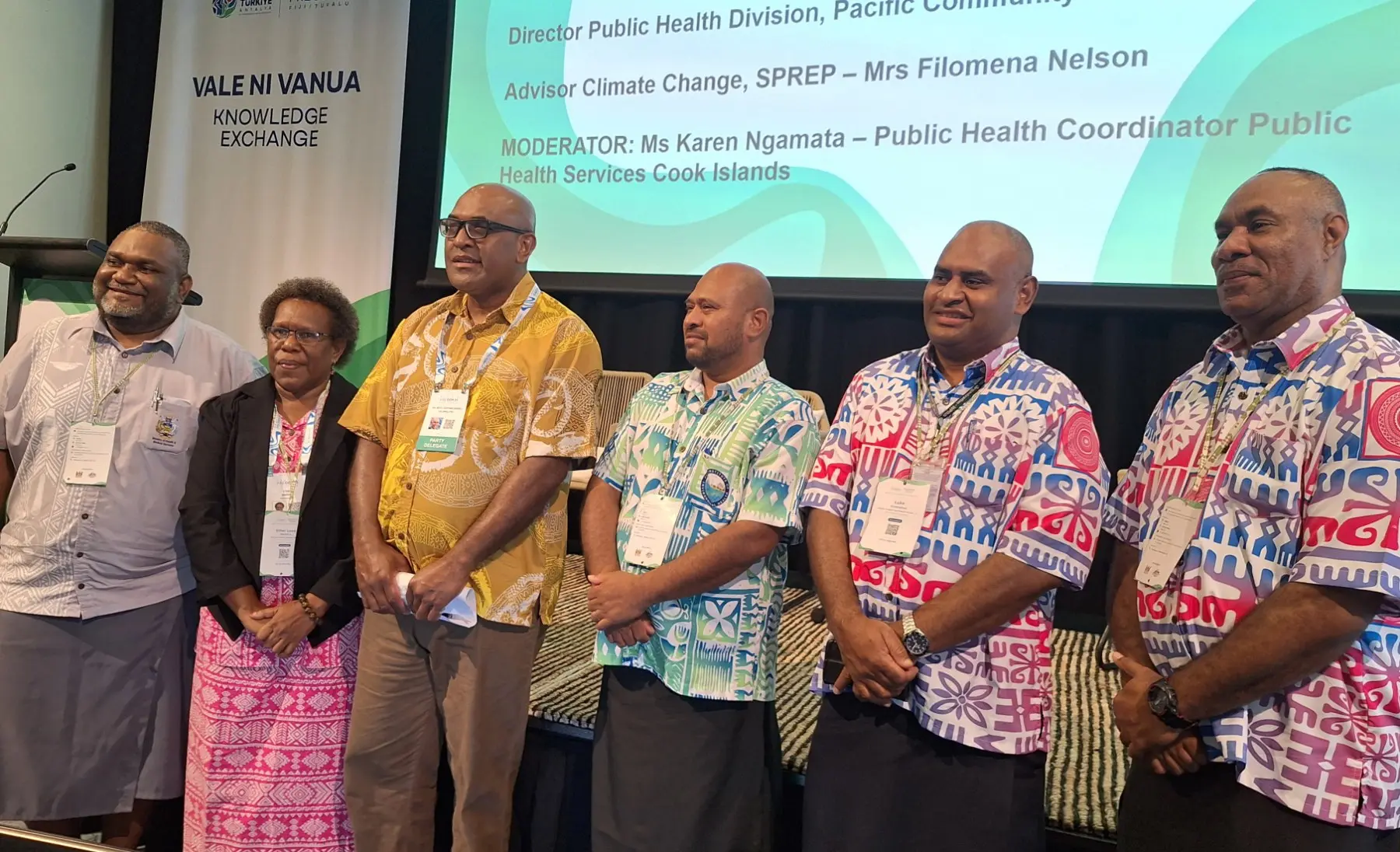
FDB chief executive officer Filimone Waqabaca (left), FNU Vice-Chancellor Professor Unaisi Nabobo-Baba and Pacific Planetary Health Research Centre Watershed Interventions for Systems Health (WISH-Pacific) project manager and coordinator Timoci Naivalulevu in Nadi.
Photo: Katherine Naidu
Communities must lead efforts to protect Fiji’s watersheds, with long-term investment and local knowledge playing key roles in safeguarding water supplies, public health and livelihoods.
Fiji National University (FNU) Pacific Planetary Health Research Centre Watershed Interventions for Systems Health (WISH-Pacific) project manager and coordinator Timoci Naivalulevu said activities upstream could directly affect the health and livelihoods of communities downstream.
Speaking at the Pre-COP31 Investing in Natural Capital: The Pacific Opportunity event at Hilton Fiji Beach Resort and Spa in Nadi last week, he said environmental protection required an integrated approach, from mountain ridges and rivers to coastal reefs.
Related stories
“Water connects activities upstream with consequences downstream,” Mr Naivalulevu said.
He said deforestation, soil runoff, livestock waste and unsafe sanitation could contaminate waterways, while heavy rainfall and drought linked to climate change added pressure on water supplies and hygiene practices.
“Forty per cent of Fiji’s population still rely on an untreated water supply,” he said.
Mr Naivalulevu said the WISH-Pacific project combined scientific research with community knowledge to identify risks and develop solutions.
“The research, or the science, does not take the lead; it’s the community that takes the lead,” he said.
He said communities needed the authority to set their own priorities, with women, young people and people with disabilities included in decision-making.
Effective watershed protection also required cooperation across the health, agriculture, water services, research and business sectors.
Mr Naivalulevu said funding needed to extend beyond individual projects to support long-term watershed protection, water system maintenance and community-led initiatives.
He said investment in natural capital should go beyond economic returns to protect ecosystems, food security and public health.
“If we want a blue and green Pacific, we must invest in the relationships, which take time, that keep land, water, and people healthy together,” he said.