El Niño threatens hydroelectric power supply
Reduced water levels affecting Energy Fiji Limited's hydroelectric schemes.
Wednesday 04 November 2026 | 16:00
Updated 04 November 2026 | 17:54 FJT

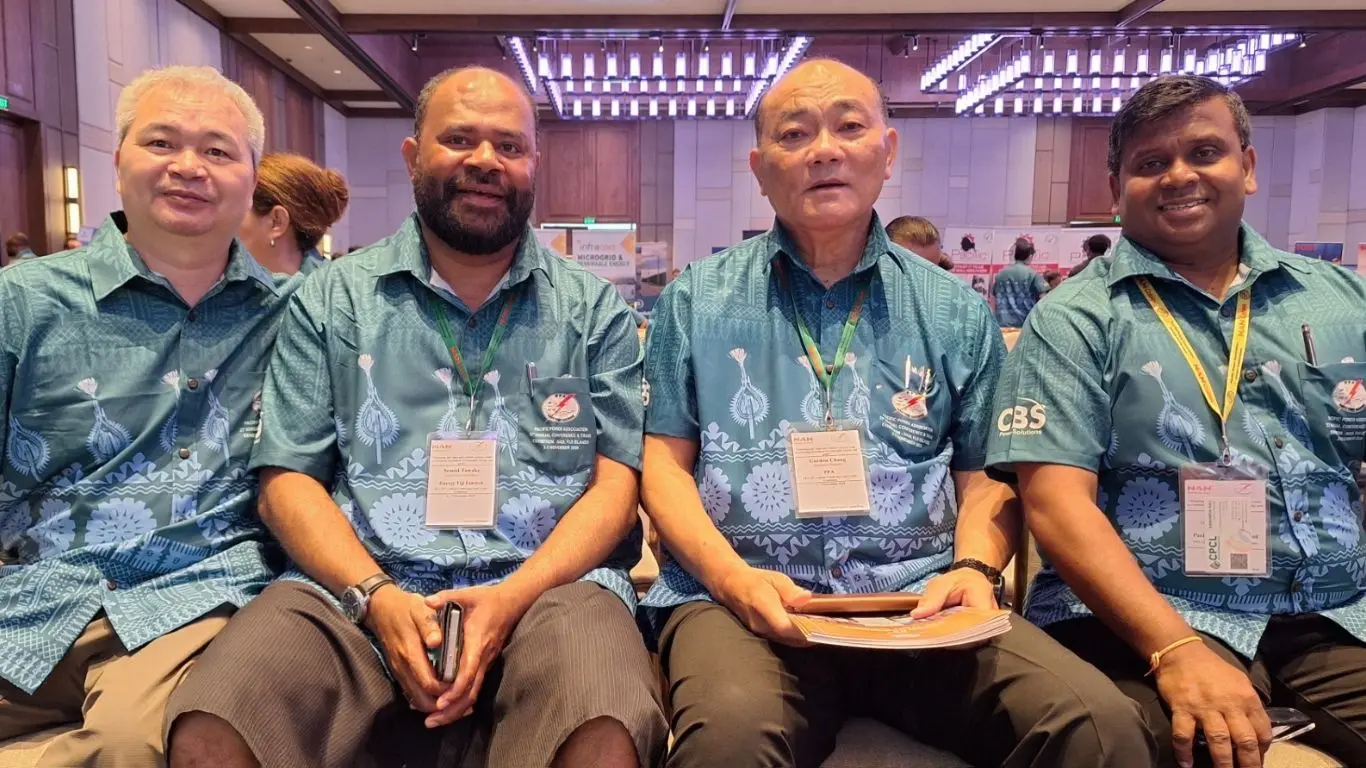
World Bank senior energy specialist Ximing Peng, Energy Fiji Limited chief financial officer and corporate director Semisi Tawake, Pacific Power Association executive director Gordon Chang, and CPCL general manager Karunesh Rao.
Photo: Waisea Nasokia
The impact of El Niño on Fiji’s water resources is raising concerns for both electricity generation and community water supplies as dry conditions continue to affect the country.
Energy Fiji Limited chief financial officer and corporate director Semisi Tawake said reduced water availability was already affecting hydrology at the company’s two hydroelectric schemes.
Speaking at the 33rd Pacific Power Association Annual Conference and Trade Exhibition at the Crowne Plaza Fiji Resort and Spa in Nadi, Mr Tawake said global crises and the effects of El Niño were creating challenges for the electricity sector.
Related stories
“I believe for EFL there are a lot of things that are happening at the moment regarding all the crises that are happening globally,” he said.
“As well as you might go from the northwest side of Fiji, you will notice the El Niño impact, and that's impacting the hydrology in terms of our two hydro schemes that we're having at the moment.”
He said EFL was discussing the challenges with development partners while assessing long-term risks associated with the transition to renewable energy.
“It's something that we're talking with the development partners on, as well as the long-term risk mitigation of the renewable energy transition,” he said.
Mr Tawake said EFL's focus over the next one to four years was to deliver its planned programme through a financing strategy supported by different funding sources.
“We will need to talk more with our allied members in terms of how to achieve the programme that we set for us,” he said.
Meanwhile, the National Disaster Management Office (NDMO) continues to urge communities across Fiji to prepare for potential water shortages as dry conditions are expected to continue.
The NDMO has advised people who depend on rainwater, tanks, boreholes, wells and other local water sources to begin rationing supplies before their sources run dry.
Communities have also been urged to store water safely while supplies remain available.
Farmers are advised to monitor their crops, livestock and available water resources and seek assistance early.
Communities receiving carted water should ration supplies and prioritise essential household needs.
The NDMO has also urged people to report drying or failed water sources promptly to local authorities or their Divisional Emergency Operations Centre.
Government agencies are continuing to assist affected communities through water carting and other support, although reaching remote and maritime communities may take time.
The warnings highlight the importance of managing Fiji's water resources carefully as the country faces the combined challenges of changing weather conditions, electricity generation requirements and the need to maintain reliable water supplies.