Locator beacons key to faster sea rescues, says Life Flight (Fiji) Trust
Organisation says GPS-enabled devices could dramatically cut search times and improve survival during maritime emergencies.
Monday 03 August 2026 | 13:00
Updated 04 August 2026 | 14:16 FJT

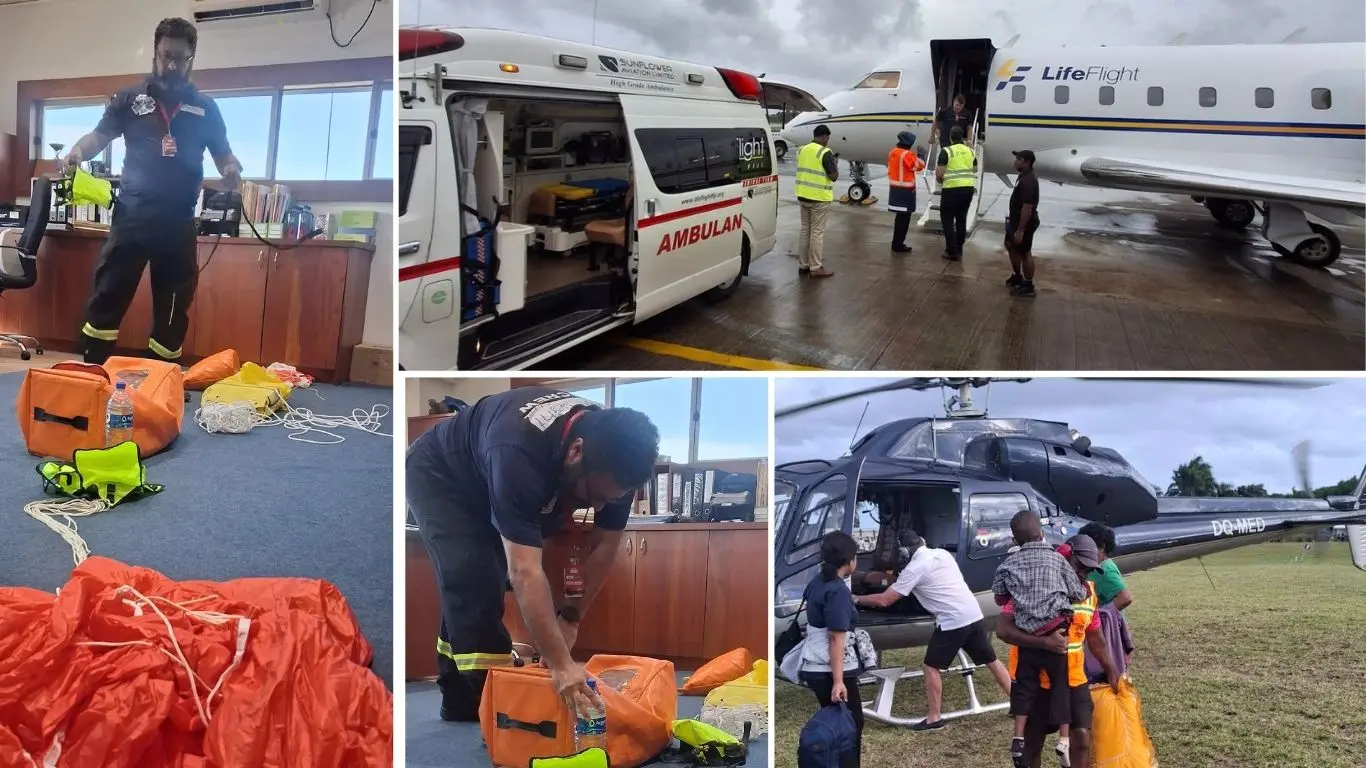
Life Flight (Fiji) Trust is urging seafarers, maritime operators and the Government to invest in emergency locator beacons, saying the devices could dramatically reduce search times and save lives at sea.
Life Flight Operations and Training Lead Anthony Blake said wider use of Emergency Position Indicating Radio Beacons (EPIRBs) and Personal Locator Beacons (PLBs) would strengthen Fiji's search and rescue (SAR) capability, particularly in remote maritime areas.
"When activated, these beacons provide GPS coordinates directly to the Rescue Coordination Centre, allowing rescue teams to respond quickly and reducing the costly search phase of an operation," Mr Blake said.
Related stories
His comments follow the recent rescue of six medical professionals who survived nearly 38 hours adrift in Lau waters.
Mr Blake said their survival was aided by wearing life jackets and remaining together while awaiting rescue, but added that locator beacons could significantly improve rescue outcomes by helping emergency teams pinpoint a vessel or person in distress much sooner.
He cited Kiribati and Tuvalu as examples where wider use of locator beacons had reduced search times and improved the success of rescue operations.
Life Flight, a not-for-profit organisation, said it has been ready to support Fiji's SAR, medical evacuation (MedEvac) and humanitarian response systems for the past seven to 10 years and wants to work more closely with Government, emergency services and corporate partners.
The organisation operates a fixed-wing aircraft, a helicopter and a road ambulance and, through partnerships, also has access to additional sea, air and land assets. It relies heavily on volunteer doctors, nurses, paramedics, rescue technicians and ambulance officers.
Mr Blake said funding remained the organisation's biggest challenge.
"The two biggest challenges are funding and attracting corporate sponsorship, and we believe incentives such as tax rebates will really help," he said.
He said many SAR and MedEvac missions were funded by families, insurance providers or, in some cases, by the Trust itself.
Life Flight has also invested in para-cargo survival kits containing drinking water, life jackets and locator beacons that can be dropped from aircraft during rescue operations.
Mr Blake said the system had already been used successfully during a rescue in the Yasawa Group, where three fishermen stranded at sea for more than 48 hours were assisted.
Each survival kit costs about $7,000 and is currently funded entirely by the Trust.
Life Flight has also invested in helicopter rescue systems, including static-line rescue equipment and Helicopter Underwater Escape Training (HUET) for its personnel.
However, Mr Blake said some rescue capabilities could not yet be fully utilised because Civil Aviation Authority of Fiji regulations require further discussion and possible amendments or exemptions before live training involving rescue equipment deployment and static-line rescues can proceed.
The Trust has presented proposals on SAR, humanitarian assistance, disaster relief and MedEvac services to Government ministries, emergency agencies and corporate organisations, and says it remains ready to strengthen Fiji's emergency response capability.