Military warns of permanent immunity
RFMF Commander Major General Jone Kalouniwai said decisions made during the Bill's consideration could have consequences for generations.
Monday 02 November 2026 | 07:00

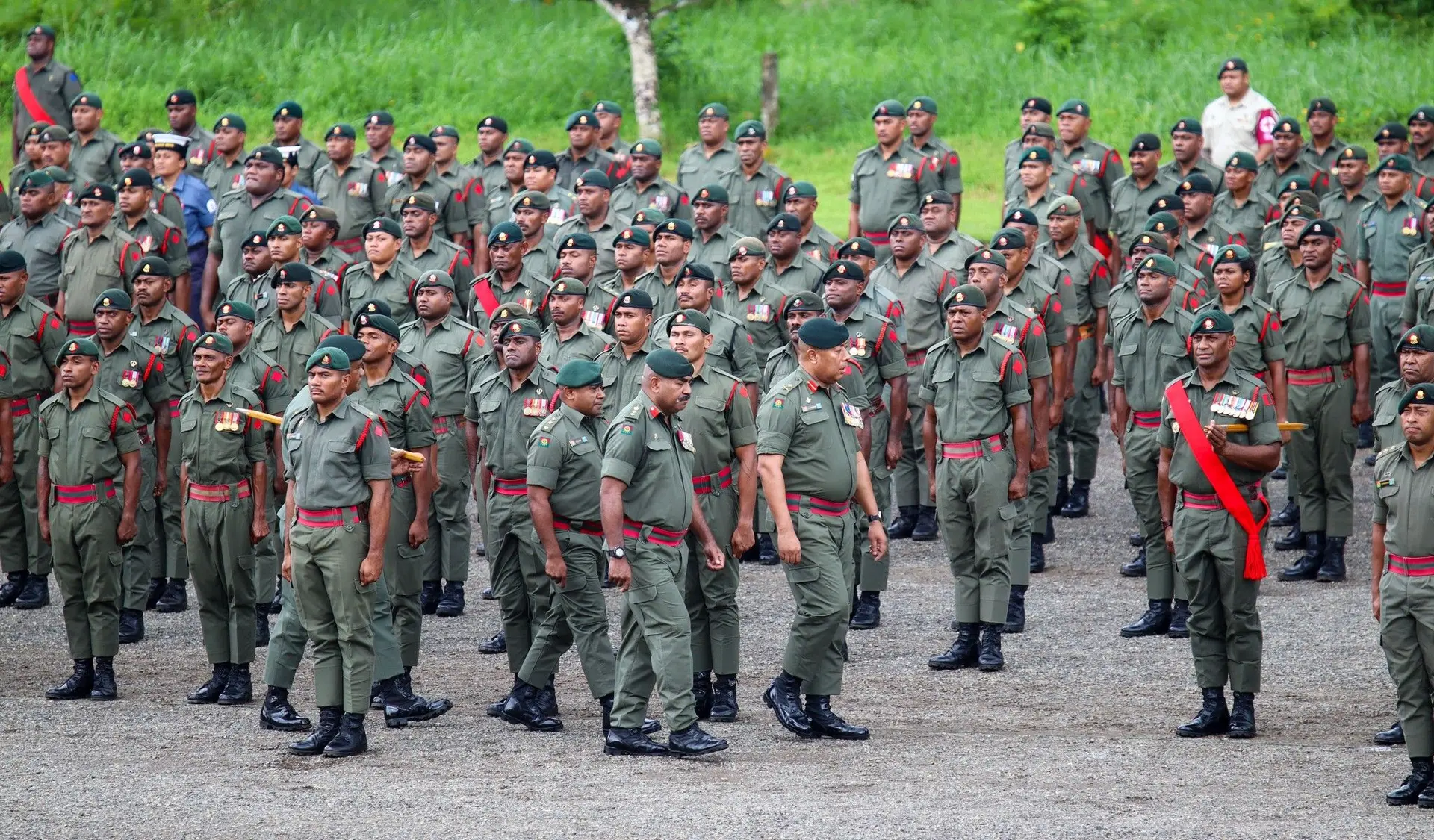
RFMF Commander Major-General Ro Jone Kalouniwai inspecting officers during the End of Year Parade at the Force Training Ground in Nasinu.
Photo: RFMF Media Cell
The Republic of Fiji Military Forces (RFMF) has warned that Fiji risks permanently entrenching constitutional immunity for past coups if Parliament passes the Constitution (Amendment) Bill No. 32 of 2026 without addressing the proposed protections.
RFMF Commander Major General Jone Kalouniwai said decisions made during the Bill's consideration could have consequences for generations.
In his October 31 submission to the Special Parliamentary Committee, he raised particular concern about Section 207, which he said would make immunity permanent once the Bill passed its third reading.
Related stories
“Once this Bill passes its third reading, section 207 would make its immunity permanent and place it beyond the reach of the courts, for generations not yet born.”
Major General Kalouniwai urged the committee to reconsider the provisions before the opportunity was lost.
“If we fail to choose rightly now, our grandchildren will inherit the same mark of impunity we inherited, and the cycle will turn again.”
The warning comes from the military itself, which has declared that it no longer wants the constitutional protections associated with Fiji's history of coups.
Breaking the cycle
Major General Kalouniwai said the RFMF had examined the factors behind Fiji's repeated military interventions.
He described an Architecture of Rebellion built on secrecy, fear, loyalty to individuals rather than the public, and constitutional impunity.
The Commander said coups had not only overturned constitutional government but had also been followed by legal changes that protected those involved.
“Each coup did not only break the law. It rewrote the law, so that the breaking became legitimate.”
He argued that this had created a recurring cycle in which political instability was followed by military intervention, immunity and further erosion of accountability.
“In the name of stability, we protected those who destabilised the nation. In the name of reconciliation, we silenced those who were wronged.”
Major General Kalouniwai said the military was now prepared to give up the protection it had previously benefited from.
He referred to the Supreme Court's August 2025 advisory opinion, saying the court had recognised that immunity weakened the rule of law and could encourage future coups.
According to his submission, the court had partly retained immunity because it was considered necessary for the military's return to civilian rule.
The Commander argued that the military's decision to reject immunity changed that consideration.
“Mr Chairman, the party for whose benefit that bargain was made now freely declines it. On the Court’s own reasoning, what remains is the case against immunity.”
Wider constitutional safeguards
The RFMF's submission also proposed stronger safeguards against future abuses of political and military power.
It recommended protecting voting rights by preventing early commencement of the election process and requiring a two-thirds parliamentary vote before Parliament's term could be extended.
The military also proposed a constitutional duty requiring soldiers to refuse manifestly unlawful orders and parliamentary oversight of internal military deployments.
Other recommendations included removing the chastisement proviso affecting children's rights, strengthening protections for persons with disabilities, retaining the Fiji Independent Commission Against Corruption (FICAC), balancing the Constitutional Offices Commission and safeguarding judicial independence.
The RFMF also supported retaining provisions for civilian direction of the military and the return of the Ombudsman.
Major General Kalouniwai said constitutional reform should protect the vulnerable and ensure that the law applied equally to those in authority.
He warned that the parliamentary committee faced a decision that could shape Fiji's democratic future.
“The window to choose otherwise is open today. It rests, Mr Chairman, in your hands.”
The RFMF has urged the committee to replace blanket immunity with a Truth, Accountability and Reconciliation Commission that would provide conditional protection based on full disclosure, excluding the gravest crimes.