Reconciliation must deliver justice, experts say
Speakers at a Fiji Truth and Reconciliation Commission hearing say truth-telling must lead to meaningful action and justice.
Saturday 17 October 2026 | 08:00
Updated 17 October 2026 | 09:58 FJT
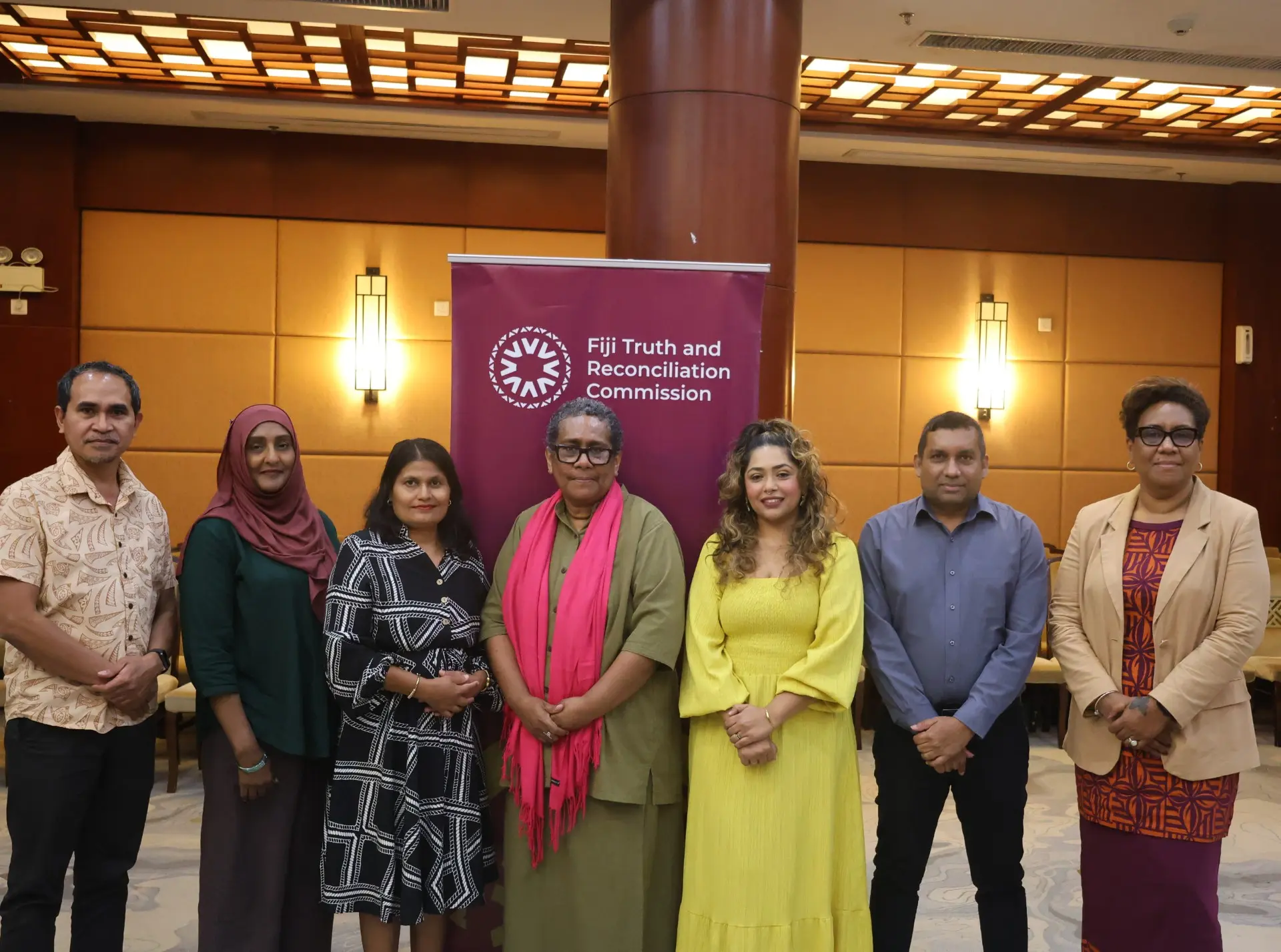
(From left) FTRC Chairperson Joaquim Da Fonseca, panellists Dr Natasha Khan, Dr Mosmi Bhim and Ms Fay Volatabu, Commissioner Rachna Nath, panellist Mr Nilesh Lal and Commissioner Ana Laqeretabua.
Photo: Fiji TRC
Fiji’s political upheavals in 1987, 2000 and 2006 had lasting effects on civil society, restricting civic space and democratic participation. Experts at a recent hearing stressed the importance of justice and meaningful reconciliation.
The impacts were examined during an expert hearing convened by the Fiji Truth and Reconciliation Commission (FTRC) at the Suva Civic Centre on October 6.
The hearing drew on the Commission’s Civil Society Sectoral Impact Assessment, authored by Fiji National University Department of Ethics and Governance faculty member Dr Mosmi Bhim.
Related stories
The assessment highlighted sustained repression, division and institutional decline across civil society, including restrictions on freedom of association, assembly and expression.
It also examined the long-term effects on communities, including displacement, emigration, economic disruption and the weakening of community life.
Dr Bhim emphasised the importance of justice in the truth-telling and reconciliation process.
“When people engage in this process of truth telling, they share their experiences with trust and faith that something will be done about it. Justice is very important,” she said.
“Without justice there can be no respect, there can be no dignity, and reconciliation becomes meaningless if there is no justice.”
Former femLINK Pacific executive director and women’s rights advocate Fay Volatabu said people wanted to know what action would follow after they shared their experiences.
She stressed the need for dialogue between opposing sides to achieve genuine healing.
“What needs to happen now is the open process where the two meet. So that true healing can happen,” Ms Volatabu said.
FTRC chairperson Joaquim da Fonseca said the political upheavals affected not only governments and institutions but also communities and people’s ability to participate freely in public life.
Centre for Democracy and Dialogue chief executive officer Nilesh Lal said implementing the Commission’s recommendations could help build a better Fiji.