Student proposes seven-year term for Solicitor-General
Adi Mere Qica argues that a fixed term would improve accountability while safeguarding independence.
Wednesday 21 October 2026 | 05:00


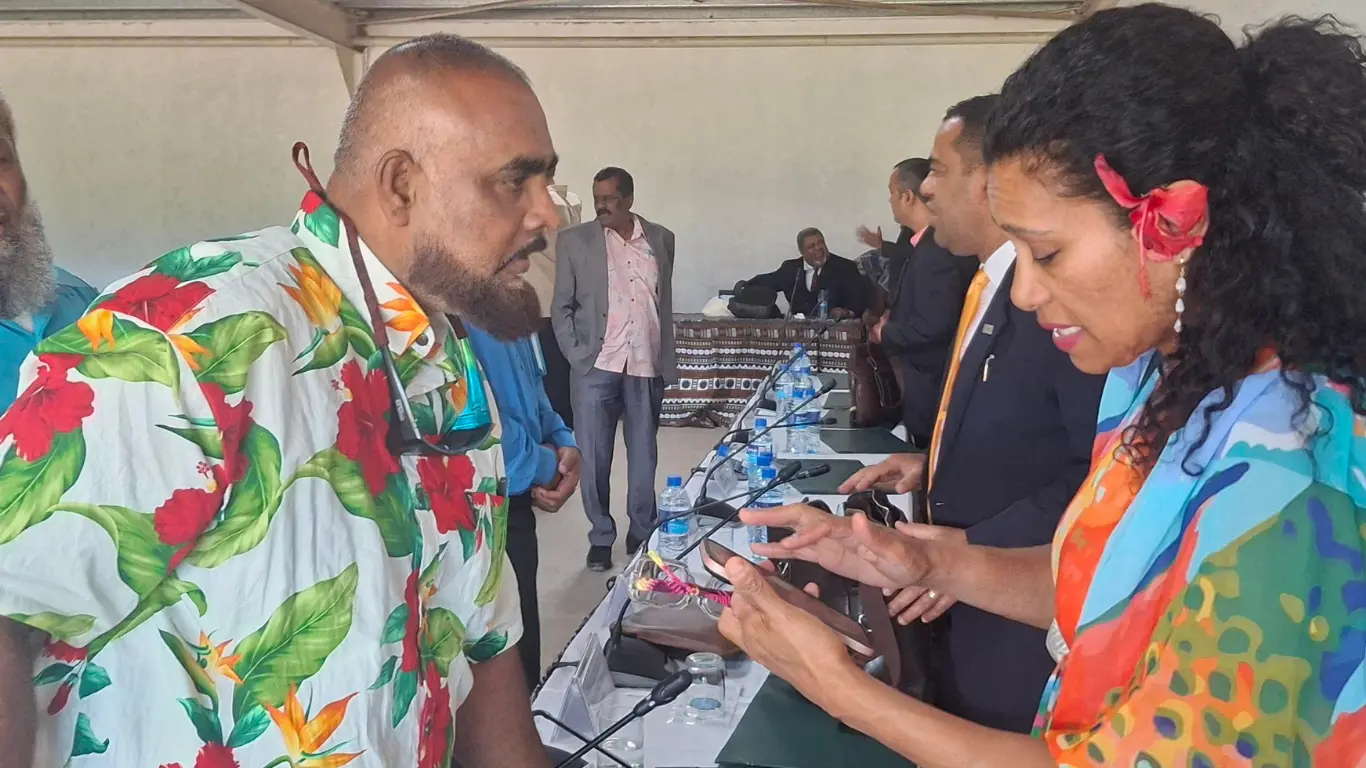
Adi Mere Qica at the public consultation on Bill No. 32 of 2026 Constitution (Amendment) Bill at Ba Market Bure on October 19, 2026.
Photo: Katherine Naidu
A medical student has proposed a seven-year renewable term for the Solicitor-General, arguing that Fiji’s chief legal adviser should not have stronger tenure protections than the Director of Public Prosecutions (DPP).
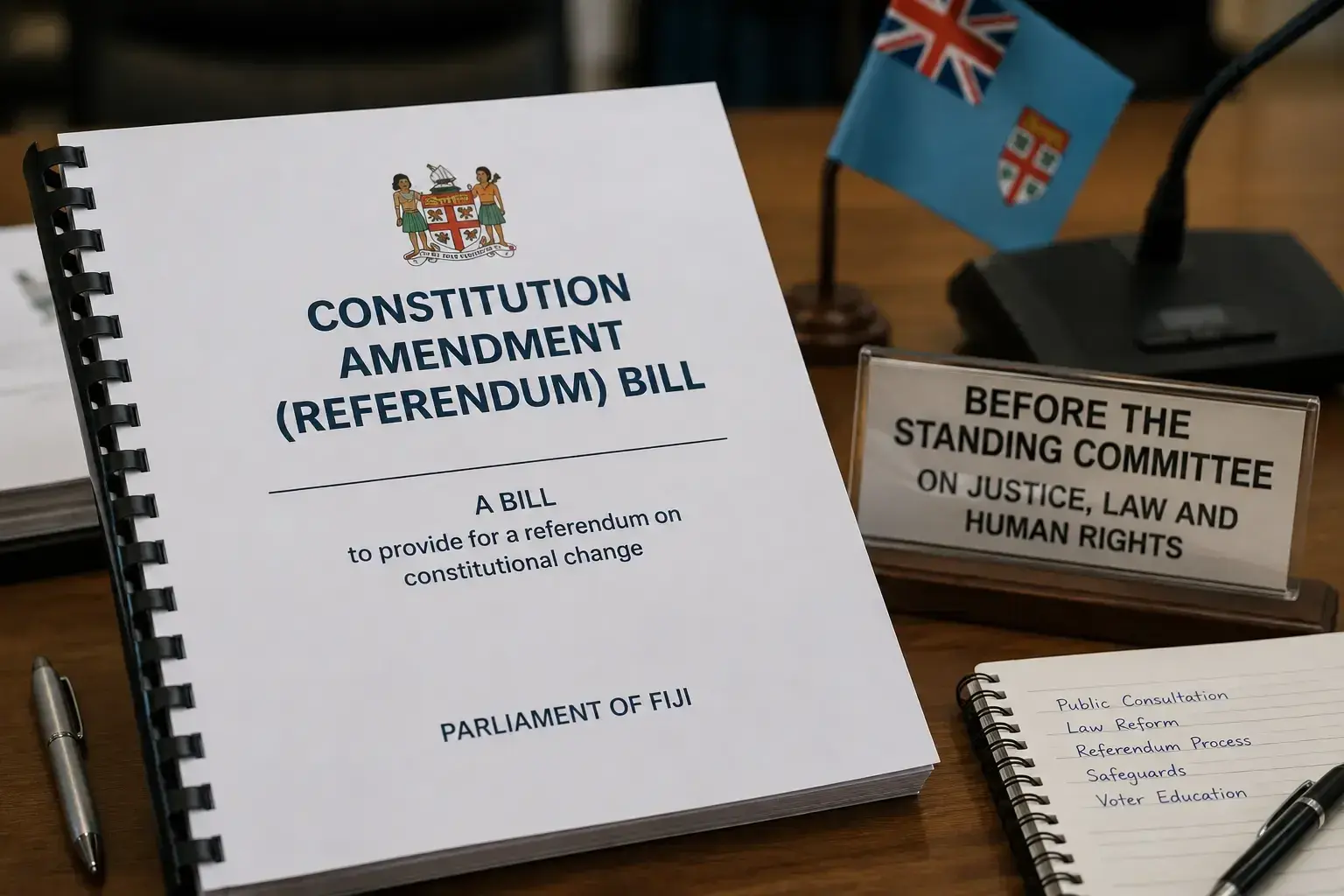
Speaking at the public consultation on Bill No. 32 of 2026, the Constitution (Amendment) Bill, at Ba Market Bure on Monday, second-year MBBS student Adi Mere Qica questioned why the Solicitor-General could remain in office until the age of 70 under the 2013 Constitution.
Ms Qica said the position was fundamentally different from that of a High Court judge and should have a fixed, renewable term.
Related stories
“If you were to go back and refer to the 1997 Constitution and other earlier arrangements, you would see that the Solicitor-General’s term of office was not always a long tenure,” she said.
“They actually had a fixed term, just like any other legal and senior office. They were treated like the Director of Public Prosecutions (DPP) and similar offices, appointed for a fixed term, often five years, and usually with an age limit of 65.”
She said the Solicitor-General’s role was primarily executive and advisory, involving providing legal advice to the Government, assisting with the drafting of laws and representing the Government in civil cases.
Under the 2013 Constitution, the Solicitor-General can remain in office until the age of 70, subject to the applicable removal provisions.
Ms Qica said this arrangement gave the office-holder protections similar to those afforded to High Court judges, whose independence required security of tenure.
“Giving the Solicitor-General the same long tenure as a judge is disproportionate. It does not make sense to me because of the nature of the job,” she said.
She argued that the current arrangement raised questions about accountability, consistency and the balance between independence and executive responsibility.
While recognising the importance of protecting senior legal officers from political interference, Ms Qica said lengthy tenure was not the only way to safeguard independence.
“The DPP also has a very important independent role in prosecutions, yet the DPP is only appointed for seven years. There is no good reason why the Government’s main legal adviser should have stronger, longer job protection than an independent prosecutor.”
Ms Qica proposed a seven-year renewable term for the Solicitor-General, aligning the office with the DPP.
“A fixed term allows the office to be reviewed every few years. It brings in new ideas. It prevents one person from holding on to that post, that position, for 20 or 30 years,” she said.