Three Vanua Levu facilities to get solar upgrades
Labasa Handicraft Market, Savusavu Market and Savusavu Hospital are expected to benefit from solar installations under the Na Vualiku Project.
Monday 12 October 2026 | 15:30

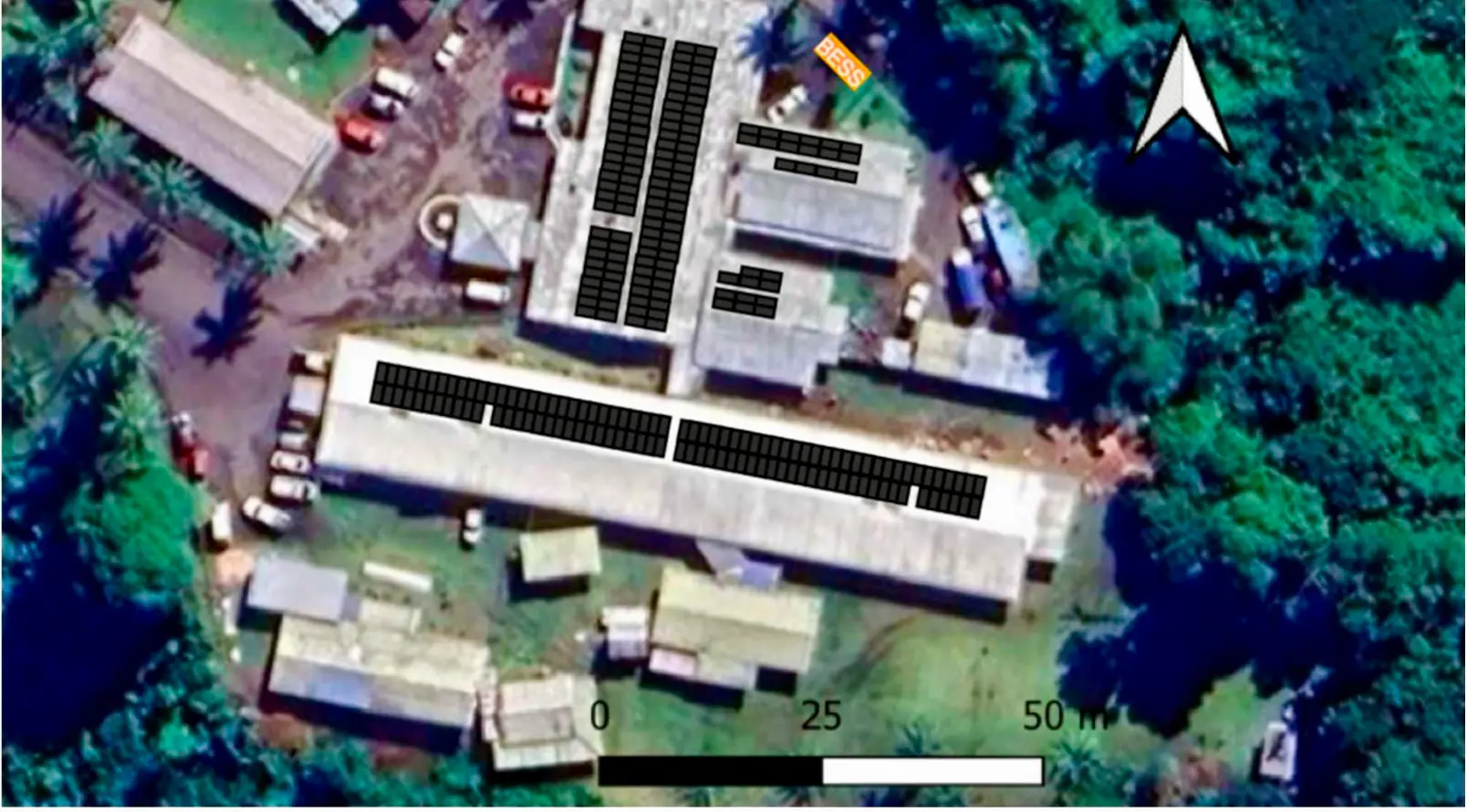
Indicative solar layout at the Savusavu Hospital, Labasa Handicraft Market and the Savusavu Market.
Three major public facilities in Labasa and Savusavu are set to undergo solar upgrades expected to save close to FJ$50,000 in combined energy costs in their first year of operation.
The development follows the completion of a comprehensive feasibility study under the World Bank-financed Fiji Tourism Development Program in Vanua Levu, known as the Na Vualiku Project.
The study assessed 25 potential rooftop and ground-based sites across nine public locations before identifying the Labasa Handicraft Market, Savusavu Market and Savusavu Hospital as the preferred sites for phase one of the programme.
Related stories
Once fully operational, the three solar installations are expected to reduce electricity costs after operating expenses, cut greenhouse gas emissions and support Fiji’s transition to a cleaner energy future by 2030.
Each facility will receive tailored infrastructure upgrades designed to reduce operating costs and strengthen essential community services.
Labasa Handicraft Market
A rooftop solar system is expected to reduce operating costs across the market complex.
The feasibility study found that sections of the existing roof would need reinforcement to safely support the weight of the solar panels and withstand wind loads.
Savusavu Market
The market will receive a rooftop solar system paired with battery energy storage to reduce daily electricity costs.
The battery system is expected to provide uninterrupted power to key town council operations during grid outages, allowing the council to serve as an emergency command centre during disaster response.
Savusavu Hospital
The hospital will have the largest installation under the project, with a high-capacity solar and battery storage system.
The system is expected to strengthen energy resilience for emergency care, refrigeration, medical devices and patient support during severe weather and power disruptions.
Sections of the hospital roof will also require structural reinforcement before installation.
Rigorous selection process
Engineers and technical experts assessed several factors to narrow the initial list of 25 sites.
These included roof load-bearing capacity, cyclone resistance, solar exposure, electricity consumption, grid connection safety and the potential for disruption to vendors and patients.
Some sites were ruled out because they required costly structural upgrades, had low energy consumption, were heavily shaded or were already earmarked for major redevelopment.
With the feasibility assessment complete, project managers are moving to the procurement phase to select a qualified contractor.
The successful contractor will prepare detailed technical designs, procure and install the solar equipment, and carry out testing and commissioning before the systems are activated.
The solar installations will operate alongside the existing electricity grid, in coordination with Energy Fiji Limited (EFL).
After commissioning, the respective public entities — including Labasa Town Council, Savusavu Town Council and the Ministry of Health — will manage the systems’ long-term ownership and operation.
By strengthening essential services and demonstrating practical renewable energy solutions, the Na Vualiku Project aims to support a more resilient and sustainable tourism economy across Vanua Levu and Taveuni.