Tourism must move from ‘Why can’t we’ to ‘Yes, we can’: Whitton
Rosie Travel Group managing director Tony Whitton says accessibility must be treated as an integral part of Fiji’s tourism future.
Thursday 24 September 2026 | 05:30
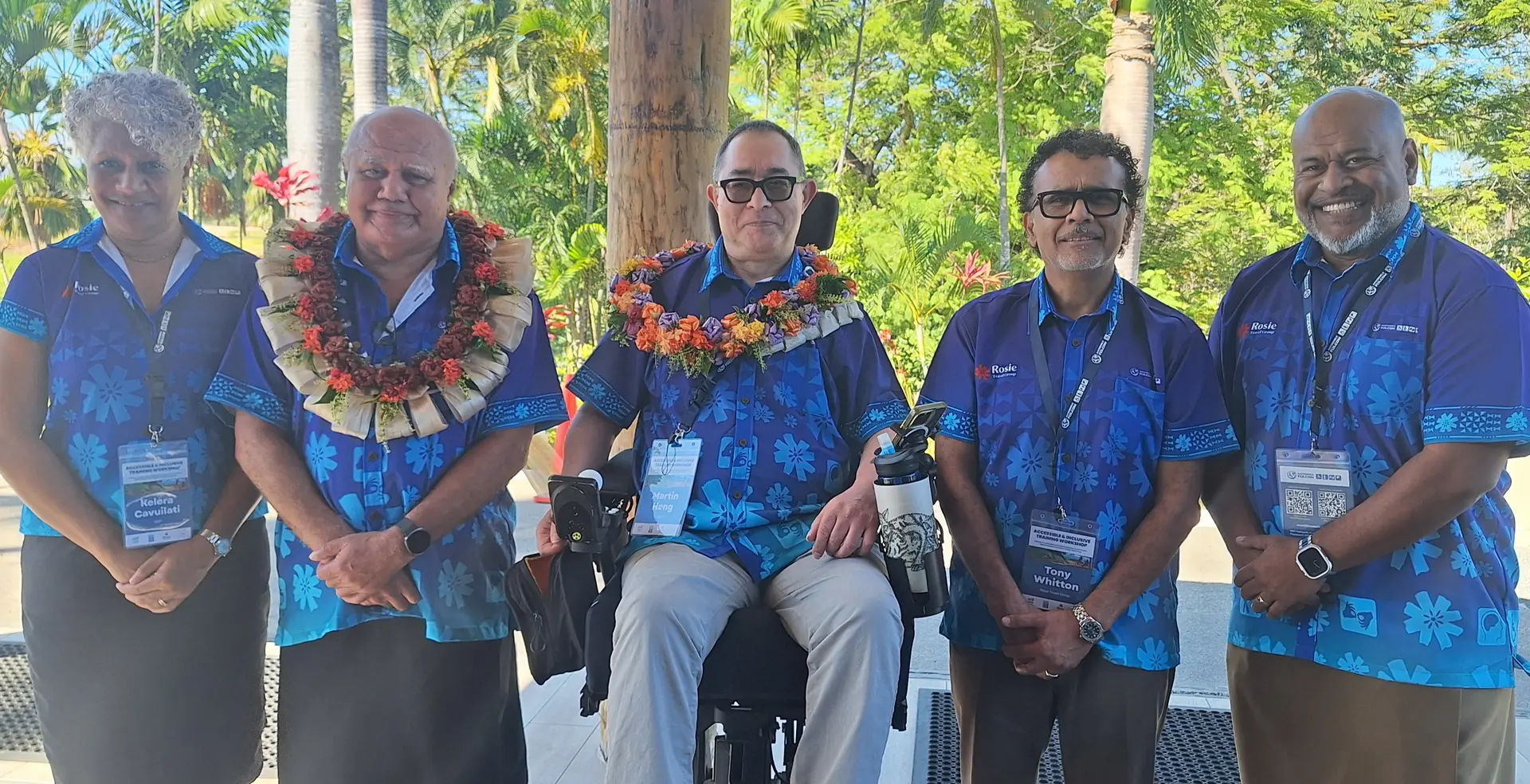
From left: MDF Country director Kelera Cavuilati, Minister for Tourism Viliame Gavoka, GDTC lead trainer Martin Hemy, Rosie Travel Group managing director Tony Whitton and general manager Eroni Puamau.
Photo: Waisea Nasokia
Fiji’s tourism industry must move beyond asking why accessibility cannot be provided and start proving that it can, says Rosie Travel Group managing director Tony Whitton.
Mr Whitton made the remarks during the opening of the Accessible and Inclusive Travel Training Workshop at the Tanoa International Hotel in Nadi yesterday.
He said accessibility and mobility tourism was just as important as any other tourism segment and must be serviced with thoughtfulness and dignity.
Related stories
“Today is an important milestone for our tourism development, thanks to MDF and our Fiji Government,” Mr Whitton said.
He said the workshop would help the industry develop an action plan involving specialised training, investment in hotels and tourism attractions, and the purchase of specialised equipment to improve the mobility and experience of visitors with disabilities.
It would also include creating tourism packages that could be promoted in overseas markets to specialist tour operators operating in the accessibility sector.
“Today we have moved from the ‘why can’t we’ accessibility question to the ‘yes, we can’,” he said.
Whitton said the industry needed to ask why international visitors with mobility, sight, hearing and speech challenges could not enjoy Fiji’s natural beauty, culture, food and hospitality like other visitors.
“Why can’t they access and experience Fiji’s breathtaking landscape and oceans? To be immersed in Fiji’s living culture,” he said.
He said Rosie Travel Group had already invested in specialised equipment to make experiences more accessible.
“We now have special mats; we have carbon fibre and special accessible wheelchairs that can now go into the ocean,” Mr Whitton said.
He said such investments would allow more visitors to experience Fiji’s beaches, sandbanks and pristine waters.
Mr Whitton said the industry had a responsibility to ensure accessibility was not treated as an afterthought but as an important part of Fiji’s tourism future.