Nadi must prepare for floods before waters rise: Dawai
Ms Dawai, who is from Nadi, said she had personally experienced the effects of major floods, including those in 2009 and 2012.
Thursday 08 October 2026 | 11:30

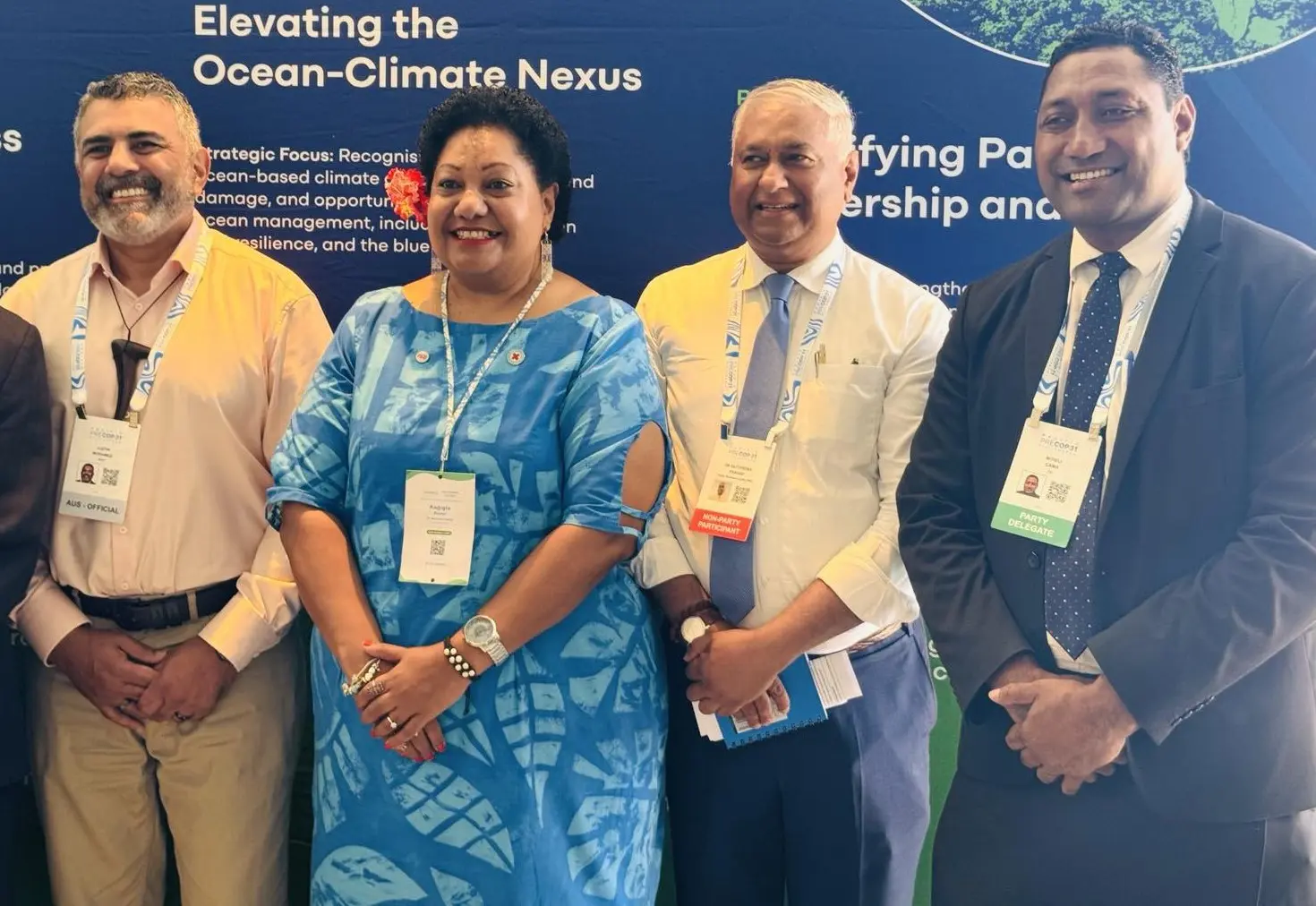
From left: Australia's ambassador for First Nations People Justin Mohamed, Fiji Red Cross Society director general Ragigia Dawai, Abt Global climate lead Dr Satyendra Prasad, and Permanent Secretary for the Ministry of Rural, Maritime Development and Disaster Management Mitieli Cama at the Pre-COP31 stakeholder event on climate finance for local flood adaptation - solutions for the Nadi catchment at the Sofitel Fiji Resort and Spa in Denarau, Nadi on October 7, 2026.
Photo: Katherine Naidu
Nadi must shift from responding to floods after they happen to preparing for them before water level rises, Fiji Red Cross Society director general Ragigia Dawai says.
Ms Dawai said repetitive flooding was affecting homes, livelihoods, schools and businesses.
Speaking at the Pre-COP31 Stakeholder Event on Climate Finance for Local Flood Adaptation - Solutions for the Nadi Catchment held at Soft.tel Fiji Resort and Spa at Denarau yesterday, she said communities must be at the centre of decisions on flood adaptation.
Related stories
"Flooding in the Nadi catchment is no longer something communities experience occasionally and then leave behind. It is becoming part of the conditions under which decisions are made about their homes, their livelihoods, businesses, schools and daily lives," she said.
Ms Dawai, who is from Nadi, said she had personally experienced the effects of major floods, including those in 2009 and 2012.
She said communities already knew which roads became inaccessible, which households needed help and how flooding affected livelihoods.
"Emergency response will always be necessary. But if our work begins only when the water has already risen, we've already missed opportunities to reduce the consequences," she said.
Ms Dawai said anticipatory action such as early warnings, evacuation planning, protecting water supplies and pre-positioning essential supplies could reduce the impact of flooding.
Building resilience
"The challenges in the Nadi catchment are bigger than any household, one household, or any one village, organisation, or agency can tackle."
She said long-term investment, technical expertise, planning and strong partnerships were needed to build resilience.
"That future will not be created by one intervention or one organisation. It will be built through the decisions we make now, where we invest, whose knowledge we use, how early we can act, and whether the people living with the risk have a meaningful say in the solutions," she said.
The Fiji Red Cross has more than 1400 volunteers supporting communities across Fiji, including early warning, preparedness and youth climate adaptation initiatives.