Farmers warn of rising food prices as El Niño looms
Families could face higher grocery bills as El Niño threatens vegetable production, with concerns over nutrition and access to fresh food.
Wednesday 21 October 2026 | 17:00

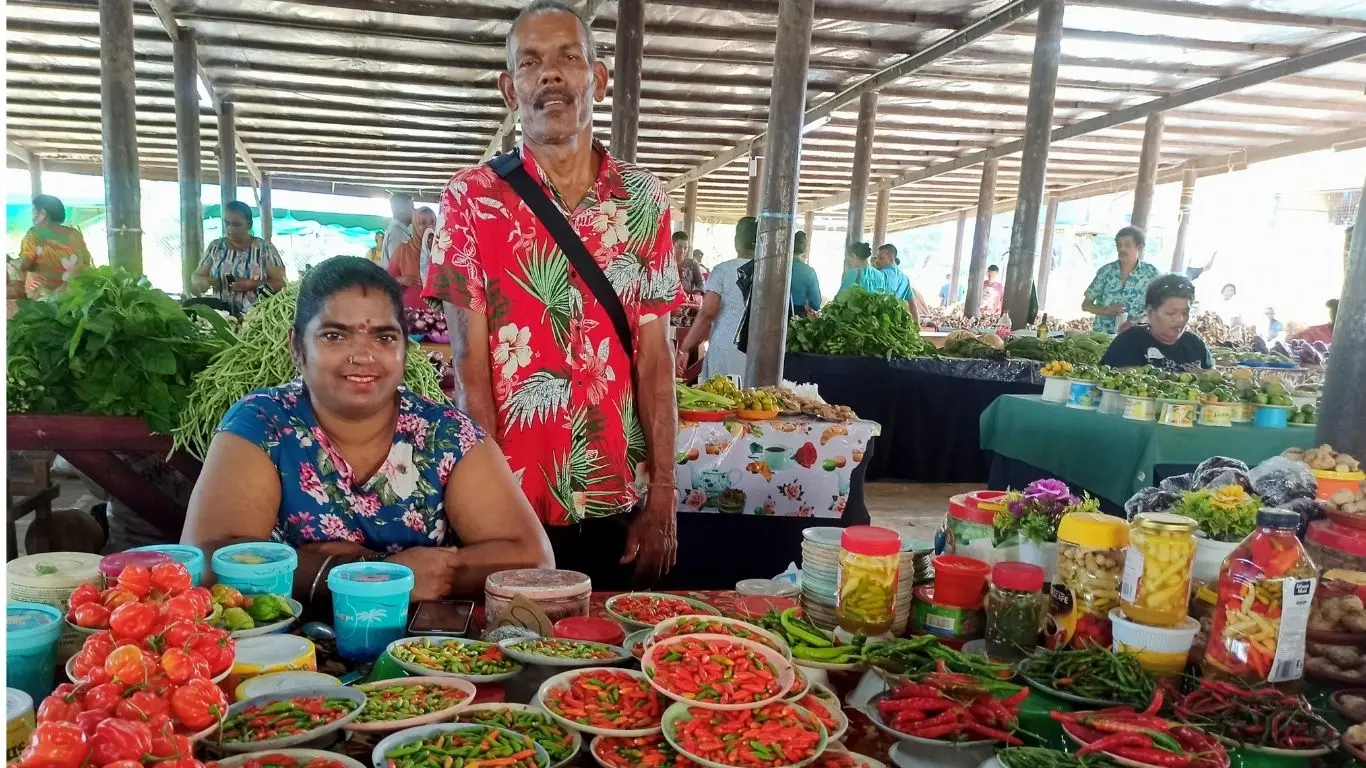
Market vendors Suman Chandra (left) and Rajesh Kumar at their vegetable stall at the Labasa Market.
Photo: Sampras Anand
Families could face higher food bills as El Niño conditions threaten vegetable production and water supplies, with farmers urged to prepare for worsening conditions.
Centre for Democracy and Dialogue (CDD) executive director Nilesh Lal said farming communities were reporting unreliable water supplies, with some sources drying up, making backup strategies essential.
Mr Lal said vegetable supplies were expected to decline under harsh El Niño conditions, pushing up demand and prices.
Related stories
“There will be less food produced and for every vegetable or crop brought to the market, the price to purchase will increase, meaning average or poor families will be affected,” he said.
He warned that limited access to healthy food could increase the risk of malnutrition as farmers reduced production to minimise losses.
“Government has got a duty to provide safe, clean drinking water, with each month posing even more struggle with streams drying; the reservoir will not be able to meet its workable capacity to assist people,” he said.
Rural settlements in the Northern Division are already experiencing the challenges associated with El Niño.
National Farmers Union (NFU) president Surendra Lal also warned that malnutrition could become a major concern if rising prices made fresh vegetables unaffordable.
Mr Lal said shortages could lead more consumers to turn to tinned food because it was more readily available.
CDD executive director Nilesh Lal urged farmers to prepare alternative water sources to irrigate their farms if El Niño conditions intensified.
He encouraged farmers to explore water-storage infrastructure to ensure crops received adequate irrigation and reduce the risk of crops drying out.
Minister for Agriculture and Waterways Tomasi Tunabuna said the ministry had a backup plan if conditions worsened.
Mr Tunabuna said the ministry continued to monitor conditions across the divisions and had assessed the impact in each division.
He added that livestock farmers could consider selling their animals to avoid losses from deaths or malnutrition if conditions deteriorated.