How changing weather is affecting Matawalu Women’s livelihoods
Atelini Naqiri says prolonged dry conditions and changing weather patterns have affected fruit production, food supplies and the roadside businesses many Matawalu women once relied on.
Friday 16 October 2026 | 17:00

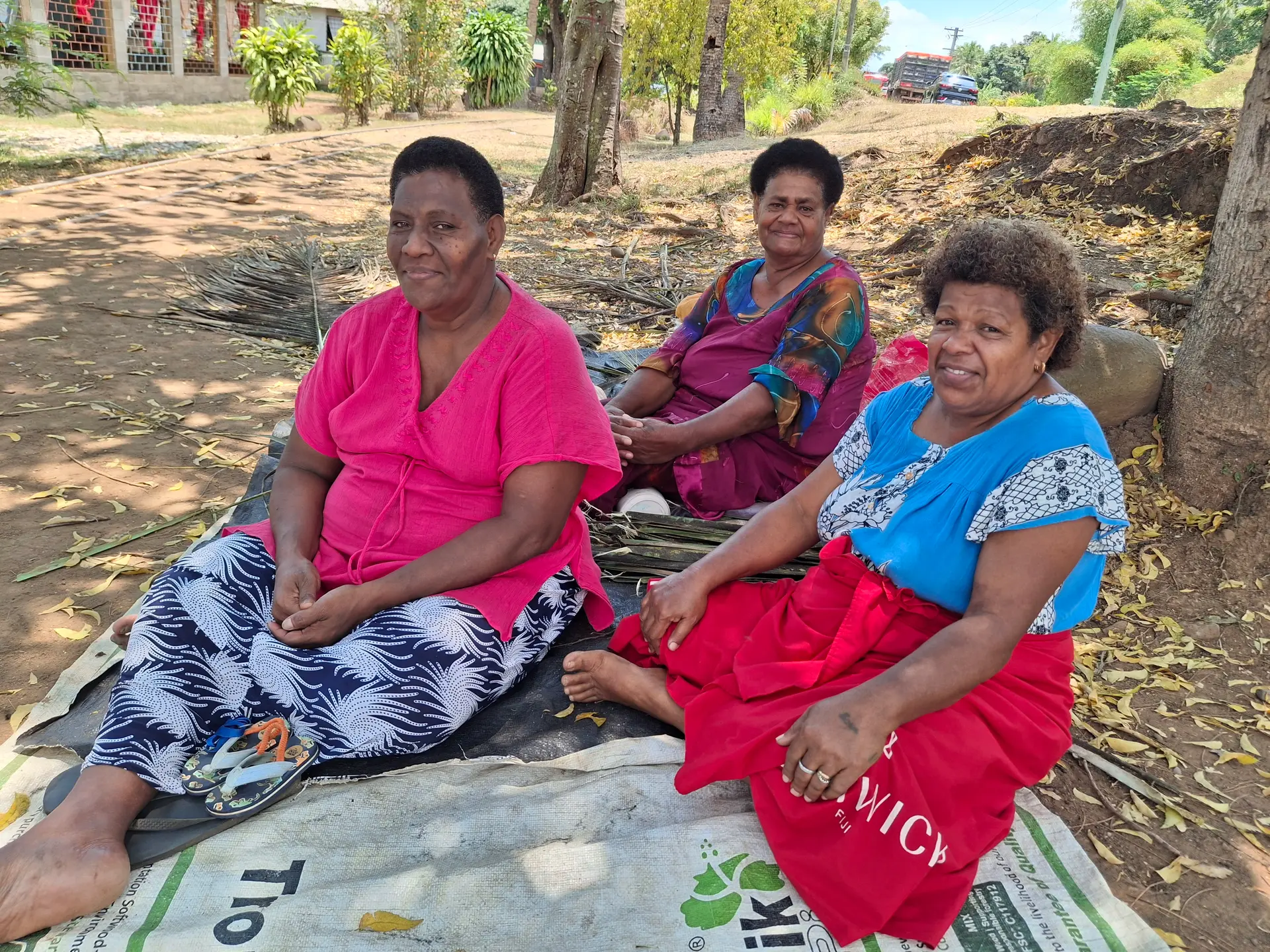
Atelini Naqiri, Sereana Rita and Vaciseva Galo in front of their homes at Matawalu Village in Lautoka.
Photo: Mereleki Nai
The mangoes are missing, breadfruit trees are bearing less fruit, and the roadside stalls that once provided Matawalu women with a reliable seasonal income are no longer as profitable.
For women in Matawalu Village, Lautoka, the effects of climate change are becoming increasingly difficult to ignore, with drought and changing weather patterns threatening their crops, food sources and daily earnings.
Village resident Atelini Naqiri said mangoes and breadfruit had once been abundant during their respective seasons, providing food for families and a valuable source of income for women selling produce along the roadside.
Related stories
In the past, the harvest was plentiful enough to support a thriving seasonal trade. Today, declining fruit production has left the women with fewer goods to sell and less money to take home.
“Breadfruit and mango trees bear less fruit than before. There used to be so much fruit that we could hardly contain it, and it was a source of income for us here at the roadside,” Ms Naqiri said.
“We did good business during the mango and breadfruit seasons. But now there is less fruit, and our business has been affected. Climate change has really affected our income.”
The impact is particularly painful during the mango season, when families would normally enjoy ripe fruit while women earn extra money from sales.
“The breadfruit tree in front of us does not bear fruit. This is the mango season, but there are no mangoes. This is the time when we should be eating ripe mangoes, but there are none,” she said.
Ms Naqiri said prolonged dry conditions had also made it difficult for villagers to grow other crops, affecting plant health, soil conditions and agricultural production.
She said poor plant growth, weakened vegetation and underdeveloped roots had made it harder for families to rely on their plantations for food and income.
With traditional sources of earnings declining, Matawalu women are increasingly turning to other available opportunities to support their households.
Sasa broom-making has become one alternative, while fishing and catching crabs provide another source of income.
Ms Naqiri said women collected crabs during high tide and sold them along the roadside, making use of the village’s location beside a busy road to reach customers.
“Right now, we women are focusing on Sasa broom-making, using natural materials such as coconut leaves,” she said.
She added that many women had become the main providers for their families, particularly where their husbands were unemployed.
“When it is high tide, the women go out and catch crabs to sell at the roadside. The good thing is that we live near the road. Whatever little we get, we sell it there and earn money daily,” she said.
For Matawalu women, the roadside has become more than a place to sell produce. It is a lifeline as changing weather conditions undermine the crops and seasonal harvests they once depended on.
As mangoes become scarce and breadfruit harvests diminish, the women face an uncertain future, forced to find new ways to earn an income while adapting to the growing pressures of a changing climate.