RFMF requires Cabinet approval to assist Police in drug operations
Commissioner of Police must certify inability to manage operation before seeking military assistance.
Friday 20 November 2026 | 14:00

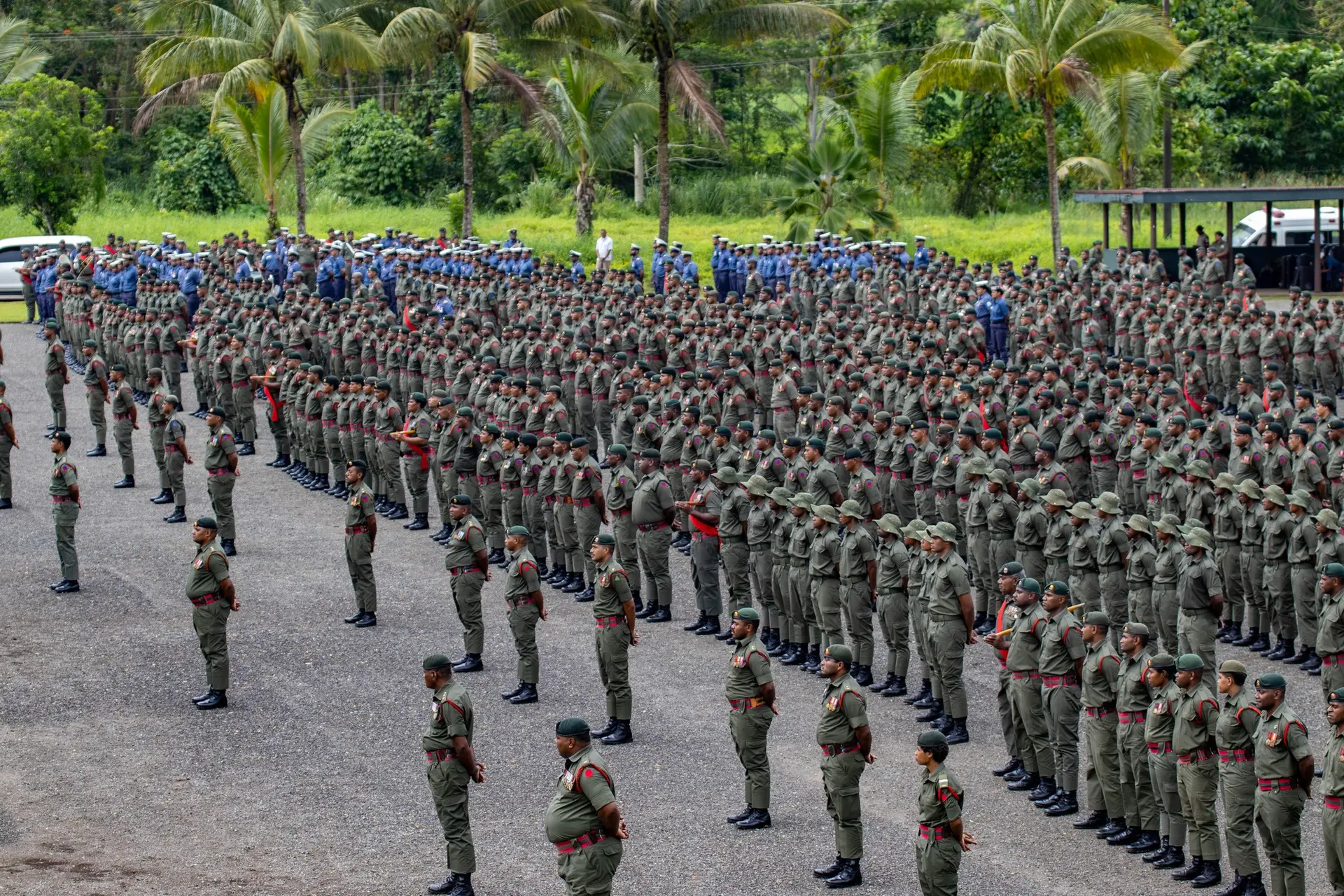
The Rebublic of Fiji Military Forces Commander's parade last December.
RFMF media
The Republic of Fiji Military Forces (RFMF) cannot independently join police counter-narcotics operations, with military assistance requiring written justification from the Commissioner of Police and Cabinet approval.
RFMF senior legal officer and consultation panel member for the proposed RFMF and Military Justice Bills, Captain Stephanie Dunn, clarified the legal requirements governing military support in the fight against illicit drugs.
She made the comments during public consultations on the RFMF Bill 2026 and the Military Justice Bill 2026 at the Nadi Civic Centre yesterday.
Related stories
Ms Dunn said the Counter Narcotics Act 2026, particularly Sections 24 and 25(1A), designated the RFMF as an authorised agency to assist in counter-narcotics operations.
However, the military’s involvement is subject to specific legal and procedural requirements.
She said the Commissioner of Police must first certify in writing that the police could not manage the situation alone before requesting military assistance.
The request must then be submitted to Cabinet for authorisation, with the decision based on advice from the RFMF Commander.
She said the process ensured civilian oversight and established clear limits on the military’s role in joint security operations.
The National Security and Defence Council, which Captain Dunn described as a Cabinet committee, oversees the implementation of Fiji’s national security strategy.
Its full members include the Prime Minister and relevant Ministers, while the RFMF Commander and Commissioner of Police participate as non-voting members.
Captain Dunn stressed that the military’s role in counter-narcotics operations remained supportive, with operational leadership retained by the agency requesting assistance.
Even when RFMF personnel participate in joint task forces with police, they remain under their own military command structure.
The legislation prohibits the transfer of military command to police, maintaining separate lines of authority and responsibility during joint operations.
Military personnel assisting in these operations are also afforded the same legal protections as police officers, Captain Dunn said.