Speight says he was never granted a presidential pardon
The former 2000 coup frontman is asking the Government to explain why his release and that of Shane Stevens did not amount to a presidential pardon.
Tuesday 13 October 2026 | 08:00

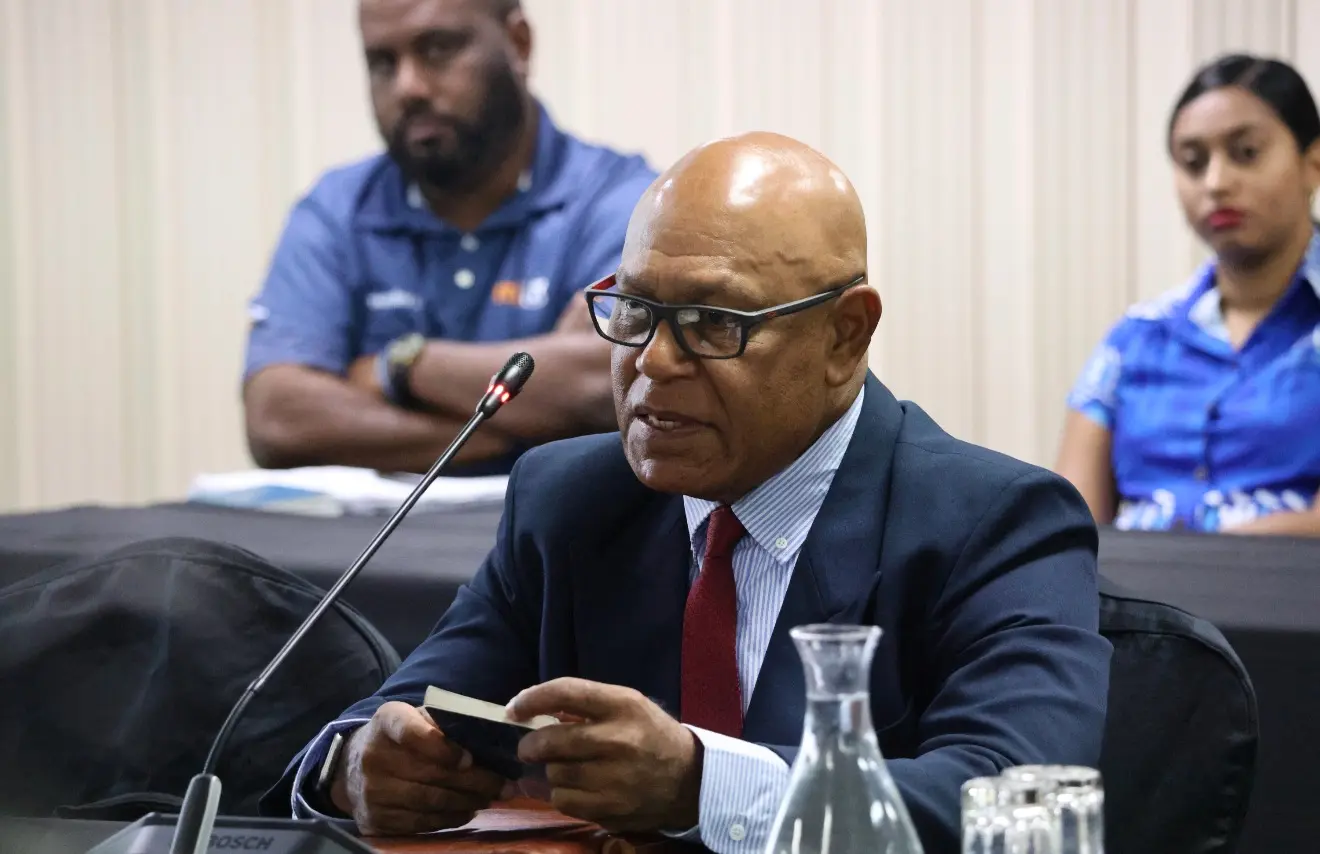
Former 2000 coup frontman George Speight says he and Shane Stevens were never granted a presidential pardon and is asking the Government to explain why.
Mr Speight was speaking last Friday at the funeral of Mr Stevens, a former Counter Revolutionary Warfare (CRW) leader involved in the 2000 mutiny at the Republic of Fiji Military Forces (RFMF) Queen Elizabeth Barracks in Nabua, Suva.
They were released from prison in September 2024 following a recommendation by the Mercy Commission to former President Ratu Wiliame Katonivere.
Related stories
Mr Speight said he had spent the past two years asking decision-makers to confirm their presidential pardons, but his requests had gone unanswered.
“The use of the word pardon was announced to the world two years ago ... for Shane and I, that word pardon is not true,” an emotional Mr Speight said.
“As I stand before you today (last Friday), I want to reveal to you that our brother Shane and I have not been forgiven by our own Government, by our own peers, and our fellow citizens who preside over that decision.
“Why announce it publicly and yet do something else? Shane and I have agreed that I will not say a word publicly, giving the Government every opportunity to at least explain to us why we do not deserve to be pardoned.”
Mr Speight said the legal document governing their release stated that their sentences had been postponed.
Section 119 of the 2013 Constitution empowers the Mercy Commission to postpone the carrying out of a punishment for a specified or indeterminate period, remit all or part of a punishment, or grant a free or conditional pardon.
“In our case, they have postponed our sentences for an indeterminate period, which means that if nothing changes in our legal situation, this will continue until we die,” he said.
“We don’t want to argue, we don’t want to cause disruptions in the Government or in the country, but just to be privately given that piece of paper that confirms a presidential pardon.”
Prime Minister Sitiveni Rabuka said the Government could only recommend an outcome, while the independent Mercy Commission made decisions on pardons.
Constitutional lawyer and Fiji Law Society president Graham Leung, who was Attorney-General when Mr Speight’s petition was considered, said the Mercy Commission had recommended that the President exercise his constitutional power of mercy in Mr Speight’s case.
“As part of that recommendation, the commission advised the President that he consider postponing the life sentence of Mr Speight for an indefinite or indeterminate period. Not all grants of mercy result in pardons. I believe Mr Speight’s case fell under this classification,” Mr Leung said.
“Treason is one of the most serious offences in the penal code or the Crimes Act. I think the commission’s decision at the time regarding Mr Speight reflects its position that treason, being one of the most serious crimes, may be beyond the reach of a pardon in the conventional sense of the word.”
Mr Speight was sentenced to life imprisonment and served 24 years before his release following the Mercy Commission’s recommendation. The remainder of his sentence was postponed, meaning it did not have to be served at that time.