Women were sexually abused inside Parl't during 2000 coup, ex-journalist tells
Maciu Bolaitamana claimed the incidents were widely known among journalists at the time but were never reported publicly.
Friday 30 October 2026 | 11:00

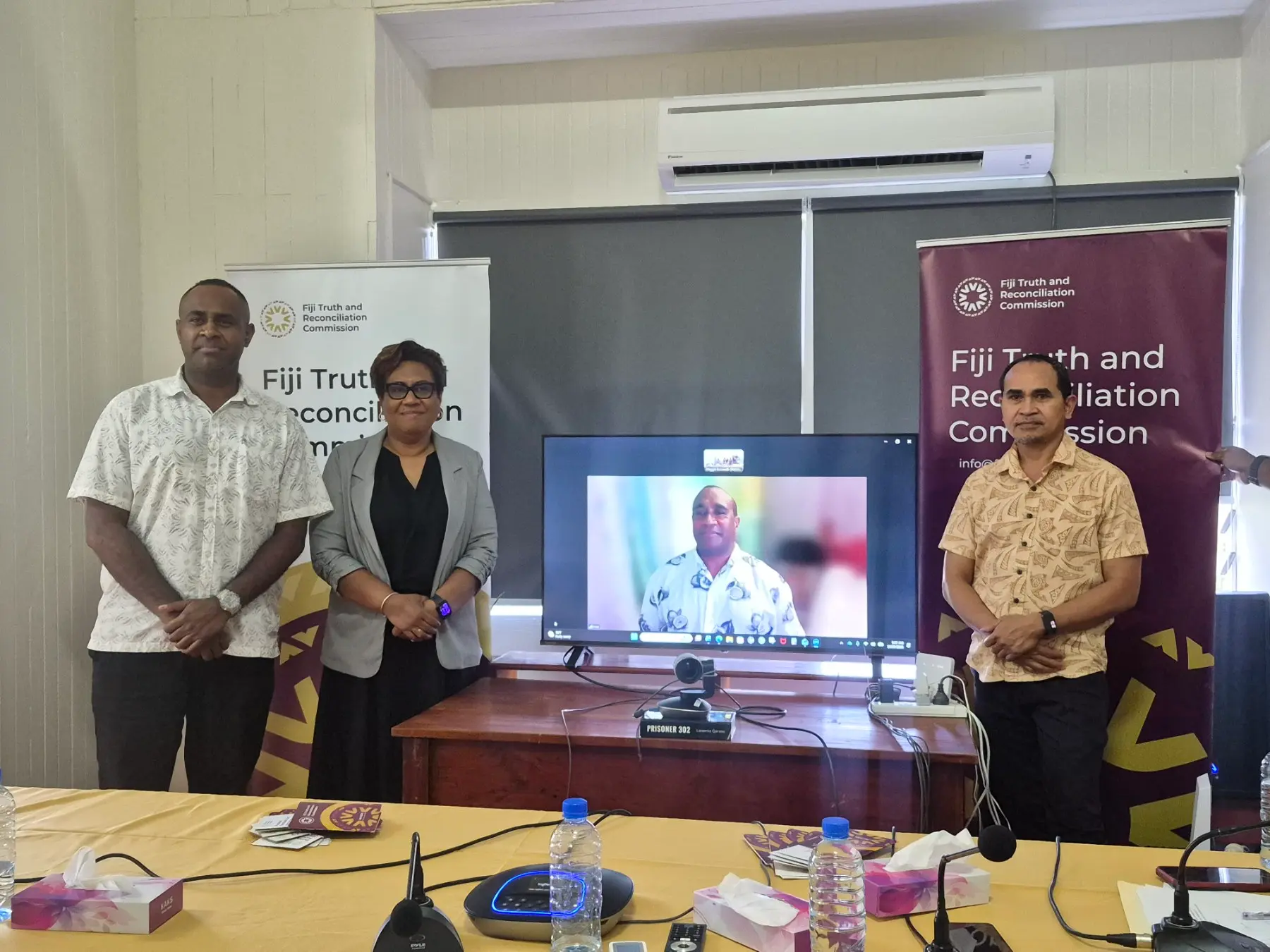
From left: Fiji Truth and Reconciliation Commission (FTRC) Commissioners Jiutasa Vosikata and Ana Laqeretabua, Former Fiji journalist Maciu Bolaitamana (on screen), and FTRC chairperson Joaquim Da Fonseca.
Photo: Kaneta Naimatau
Former Fijian journalist Maciu Bolaitamana has told the Fiji Truth and Reconciliation Commission (FTRC) that he witnessed women being sexually abused inside Parliament during the 2000 occupation, and that journalists knew about the incidents but never reported them.
Mr Bolaitamana, who worked for the Fiji Sun, The Fiji Times, Daily Post, Webmasters Fiji and FijiLive, spoke yesterday via Zoom from Queensland, Australia, where he now works as a community worker.
He claimed women who joined alleged rebel groups in the Parliament complex during the 2000 unrest were treated as sexual objects at night.
Related stories
“It was the darkest thing I've ever experienced,” he said.
He believed most of the women were married and had children, and were held against their will amid the lawlessness.
“It was something that was well known among us, and other journalists had known as well.” He could not recall whether any story about the incidents was published or broadcast.
Mr Bolaitamana also described photographing two undercover police officers being badly beaten at the Parliament gate about three weeks into the takeover.
He said he hid the exposed film and handed a soldier an unused reel.
After the photograph was published with his byline, he said, callers threatened him and told him they knew where he lived. Police were then posted outside his home.
He also told the hearing about the November 2000 mutiny. He said he saw soldiers in military uniform throw a body from a utility vehicle onto the road outside the emergency department at Colonial War Memorial Hospital.
“Both me and my colleague couldn't take that picture. It was a time that we just froze,” he said.
He said questions remained over “the immunity of those that were perpetrators of these acts” and those who made the decisions.