Act now on drugs or pay later, Fiji told
Australian experts warn that methamphetamine and cocaine can fuel organised crime, overwhelm health services and devastate communities, urging Fiji to use new wastewater data to stay ahead of the threat.
Thursday 19 November 2026 | 15:30
Updated 19 November 2026 | 16:32 FJT

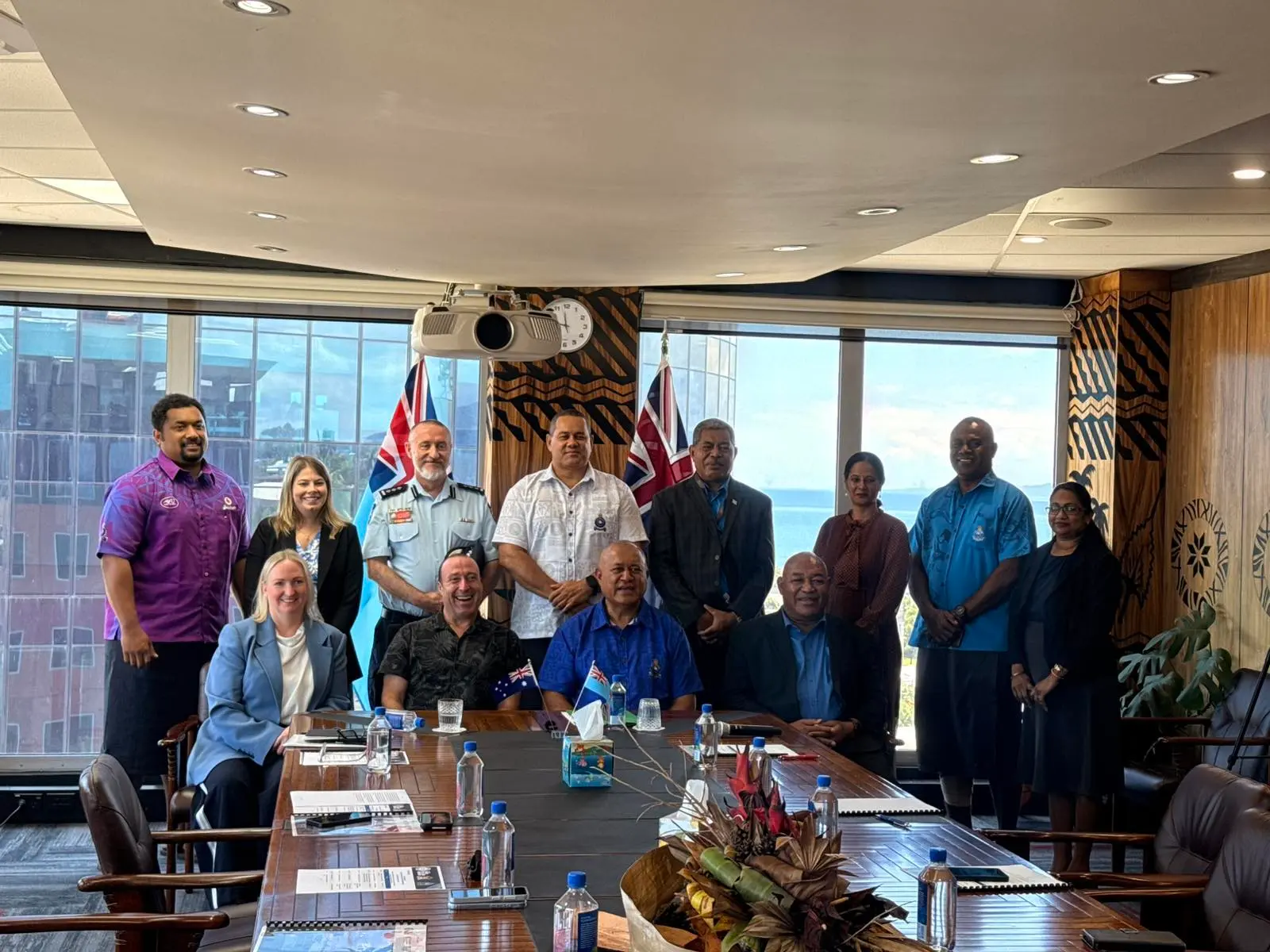
From left: National Manager Mission Coordination from the ACIC Dr Wendy Darling, Australian High Commissioner Peter Roberts and Minister for Policing and Communications Ioane Naivalurua with reps from Fiji Police, Australia Criminal Intelligence Commission and WAF on November 19, 2026.
Photo: Asenaca Ratu
Fiji has an opportunity to get ahead of the growing drug threat by using wastewater monitoring data, stronger inter-agency cooperation and regional partnerships before the country experiences the scale of harm currently facing Australia.
Australian Criminal Intelligence Commission (ACIC) National Manager Mission Coordinator Dr Wendy Darling warned that drug trafficking and consumption could inflict serious damage on communities and economies.
She said Australia's experience showed the enormous profits generated by the illicit drug trade and the serious health consequences associated with methamphetamine use.
Related stories
Australia, with a population of about 28 million, consumed 15.8 tonnes of methamphetamine and almost eight tonnes of cocaine in the year ending August 2025.
Those two drugs alone were estimated to have generated AU$13.8 billion in criminal proceeds, including AU$11 billion from methamphetamine and AU$2.8 billion from cocaine.
Dr Darling said the profits fuelled serious and organised crime, with threats increasingly affecting Australia and its regional partners.
“That's significant profits in the pockets of those who seek to harm us and our partners. Including Fiji.”
She said Australia was also experiencing serious health consequences linked to methamphetamine, including record fatal overdoses, increased ambulance attendances and hospitalisations.
“We hope and we pray that Fiji does not face the same scourge that Australia is currently facing.”
Australian High Commissioner Peter Roberts said Fiji needed to use its first wastewater drug monitoring findings to guide not only policing operations but also health, border security and prevention responses.
He said the programme was most valuable when findings were shared across agencies, allowing governments to make informed decisions on policing, health resources and other interventions before drug-related harm worsened.
Technical experts from the ACIC had worked with Fijian agencies during the monitoring process, with discussions involving the Ministry of Policing, Fiji Police Force, Ministry of Health, border agencies and other stakeholders.
Mr Roberts said the approach reflected how Australia used wastewater data to guide responses across different sectors, rather than limiting the findings to law enforcement.
“We use it to guide our policing efforts, but we can also use it to guide thinking about where do we need health resources, where might we need to think more about HIV, for example,” he said.
Dr Darling said Fiji had an opportunity to use its wastewater monitoring programme, legislation and regional partnerships to get ahead of the threat, rather than face the scale of harm experienced in Australia.