Every life matters on Fiji's roads
LTA and ACCF stress education, responsible behaviour and shared responsibility in preventing road fatalities.
Saturday 21 November 2026 | 15:30
Updated 21 November 2026 | 18:00 FJT
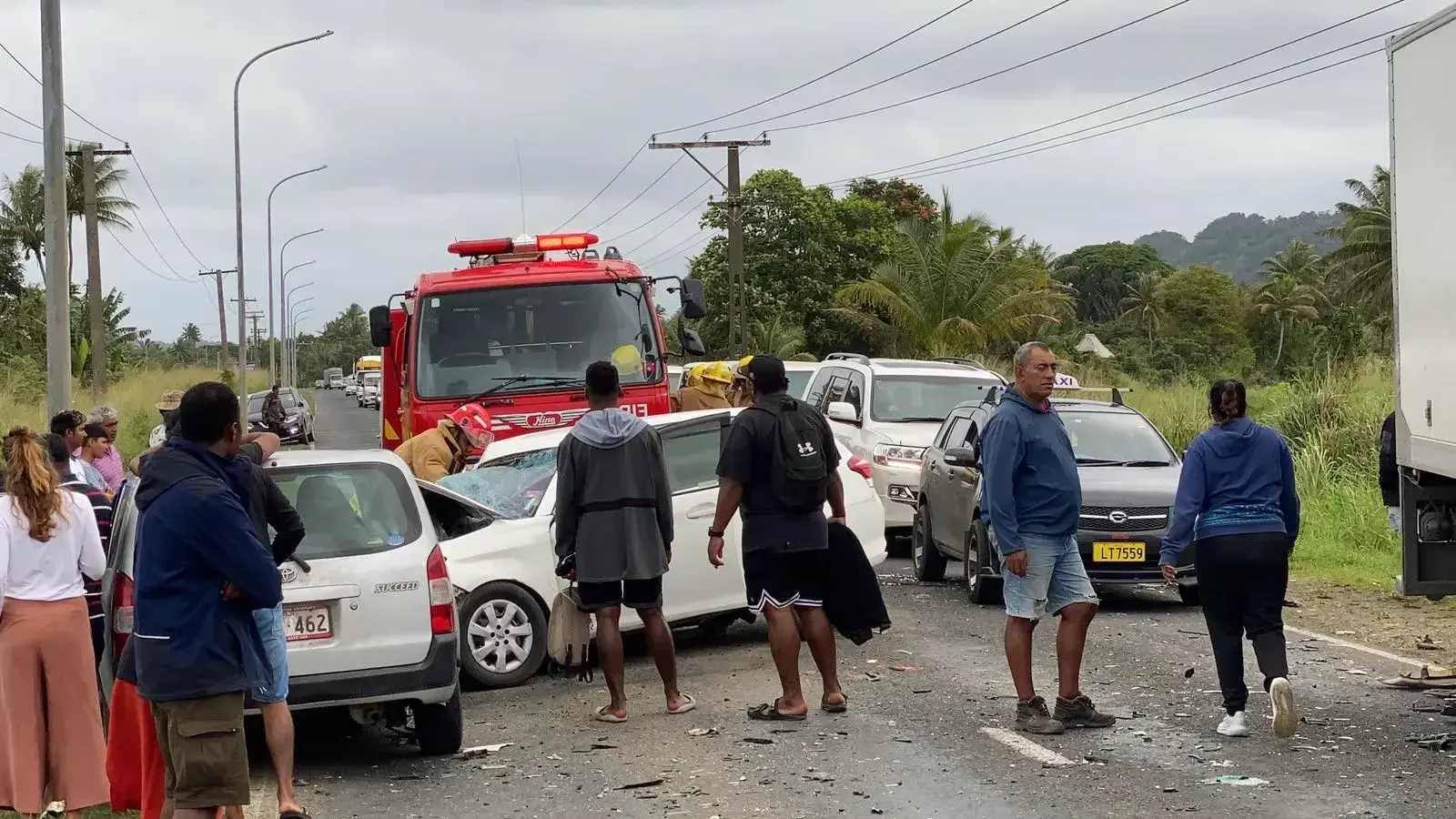
An accident scene at Vakabalea in Navua on August 5, 2026.
Photo: Leon Lord
Every life lost on Fiji's roads is a reminder that road safety is not simply about obeying traffic rules, but about making responsible decisions that protect families, passengers, pedestrians and other motorists.
As we markRoadSafetyWeek2026, the focus must go beyond awareness campaigns and enforcement operations to building a culture where every road user understands their responsibility in preventing accidents.
From speeding and careless driving to alcohol consumption, fatigue and mobile phone distractions, many of the behaviours contributing to serious road accidents are preventable.
Related stories
The Land Transport Authority (LTA) continues to emphasise that safer roads require cooperation from everyone, whether behind the steering wheel, walking along the roadside, cycling or travelling as a passenger.
Recent road safety messages from the Authority have highlighted speeding, driver fatigue, careless and dangerous driving, pedestrian negligence and drink-driving as major contributors to road fatalities in Fiji.

ACCF executive chairman Maritino Nemani.
Photo: ACCF/Facebook
These concerns are particularly important in a country where pedestrians, schoolchildren, public transport passengers, cyclists and motorcyclists share busy roads with heavy vehicles, buses and private cars.
For many families, the journey to school, work, the market or home is part of everyday life. However, a moment of impatience, poor judgement or distraction can turn an ordinary journey intoa tragedy.
The LTA has also recognised that road safety education must begin early.
During the launch of Road Safety Day 2026 at Suva Seventh-day Adventist Primary School in Lami, the Authority promoted the theme, "Road Safety Starts with Me - My Safety, My Future".
LTA Road Safety Education Manager, WatilalaFonuemphasised that children are already road users, whether walking, cycling or travelling as passengers.
Educating them from a young age helps develop responsible habits that can be carried into adulthood.
This approach also encourages children to take road safety messages home and influence the behaviour of their families and communities.
The Accident Compensation Commission of Fiji (ACCF) has an equally important role in supporting the country's road safety efforts through prevention and public awareness.
ACCF executive chairman Maritino Nemani has previously stressed that preventing accidents must take priority over responding afterlives have been lost.
He has highlighted the importance of driver awareness and the Commission's collaboration with LT A in strengthening road safety campaigns.
The partnership ref lects an important message: road safety cannot be achieved through enforcement alone.
It requires consistent education, responsible driving and a shared commitment to protecting lives.
For drivers, this means respecting speed limits, wearing seatbelts, avoiding alcohol before driving, putting away mobile phones and ensuring vehicles are roadworthy.
"You are not issued a driving licence simply because you know how to drive. You are issued one because you have demonstrated that you can drive safely, not only for yourself, but for everyone else who shares the road with you," Mr Nemani said.
Mr Nemani stressed that motorists must be particularly mindful of motorcyclists, cyclists and pedestrians, who are far more vulnerable in the event ofa collision.
"W hat may be a minor collision for someone sitting inside a car could be fatal for a person riding a motorcycle."
He urged drivers to exercise greater care when turning, changing lanes, overtaking or entering another road.
Motorcyclists must wear appropriate helmets and remain alert, while pedestrians should use designated crossings and remain visible, particularly at night.
Passengers also have a responsibility to wear seatbelts and avoid distracting drivers.
Road Safety Week should also serve as a reminder to employers, schools, parents and communities that safety is a collective responsibility.
Teaching young pe ople, encouraging responsible behaviour and reporting dangerous practices can all contribute to safer roads.
Ultimately, the success of road safety campaigns should not be measured only by the number of people reached, but by the lives protected.
Every driver has a choice. Every pedestrian has a responsibility. Every passenger has a role.
On Fiji's roads, one careless decision can change several lives forever. Making the right decision, however, can ensure that everyone reaches home safely.