FWCC study records decline in violence against women
The latest study records a decline from 64 per cent in 2010 to 48 per cent in 2025, but women in rural and maritime communities remain vulnerable.
Wednesday 18 November 2026 | 17:00

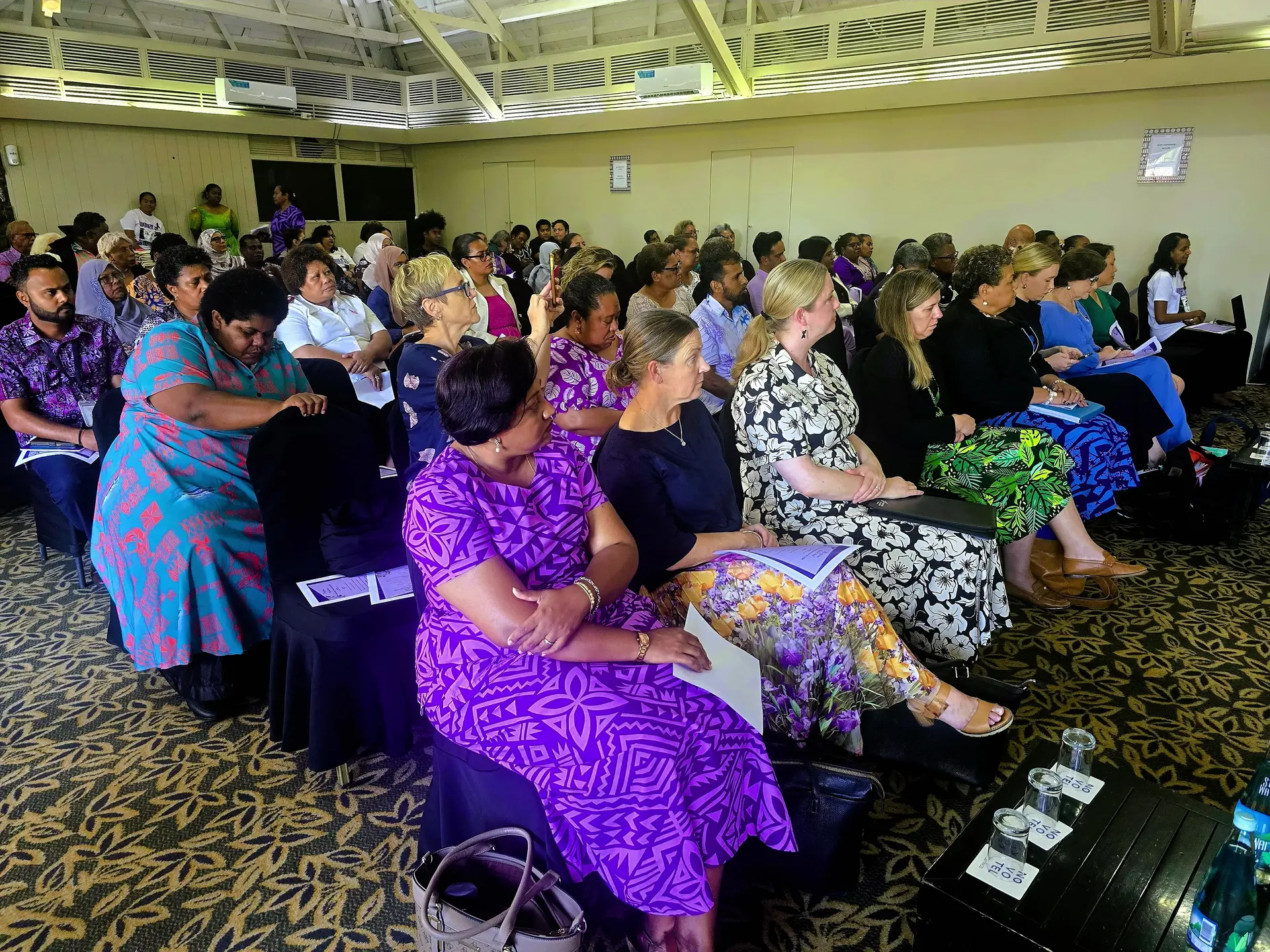
Delegates at the Fiji Women's Crisis Centre (FWCC) second national prevalence study on violence against women 2025 held at the Novotel Hotel in Nadi on November 18, 2026.
Photo: Sampras Anand
Improvements in women's rights and safety have contributed to a 16-percentage-point reduction in physical and sexual intimate partner violence against women over the past 15 years.
The Fiji Women's Crisis Centre (FWCC) launched its second National Prevalence Study on Violence Against Women 2025 at the Novotel Hotel in Nadi today.
The study found that the prevalence of physical and sexual intimate partner violence had fallen from 64 per cent in 2010 to 48 per cent in 2025.
Related stories
FWCC Labasa branch project manager Anjelene Mudaliar said strong advocacy for women's safety and rights had contributed to the improvement.
Stakeholders attending the launch applauded the progress.
Ms Mudaliar said the reduction reflected the FWCC's relentless, strategic and consistent advocacy, as well as prevention and response efforts by the feminist movement.
She said a nationally representative sample of 3,465 women from across Fiji was surveyed for the study.
Women aged between 18 and 64 took part, with the majority aged 30 and above.
The survey was supported and funded by the governments of New Zealand and Australia, while the FWCC also undertook fundraising to secure supplementary support.
Ms Mudaliar said the prevalence of child sexual abuse among women had also decreased, from 16 per cent in 2010 to 10 per cent in 2025.
However, the study found that women in rural and maritime communities remained highly vulnerable to intimate partner violence.
Ms Mudaliar said efforts to reduce violence against women would continue, with the FWCC aiming to bring the numbers down further.
According to the FWCC's second National Prevalence Study on Violence Against Women 2025 and Fiji's 2017 Census, an estimated 97,178 women had experienced physical or sexual violence by a husband or partner during their lifetime.
Ms Mudaliar highlighted the impact of violence on women living with disabilities.
The study found that 32 per cent of women with disabilities had experienced some form of disability-related violence by an intimate partner or non-partner.
FWCC coordinator Shamima Ali said the second prevalence study provided an opportunity to compare findings and understand what had changed over the past 15 years.
Ms Ali said prevention required adequate financial resources, long-term commitment, strong institutions, accessible services and a willingness to confront patriarchy.
"As I reflect on the years of work that have brought us here, I'm reminded that change is very rarely immediate," she said.
"It takes endurance, commitment, and persistence."