Navy warns of human trafficking risks at sea
Navy Commander Commodore Timoci Natuva says migrant fishers aboard Fiji-flagged and foreign-flagged vessels are vulnerable to exploitation.
Friday 20 November 2026 | 17:00

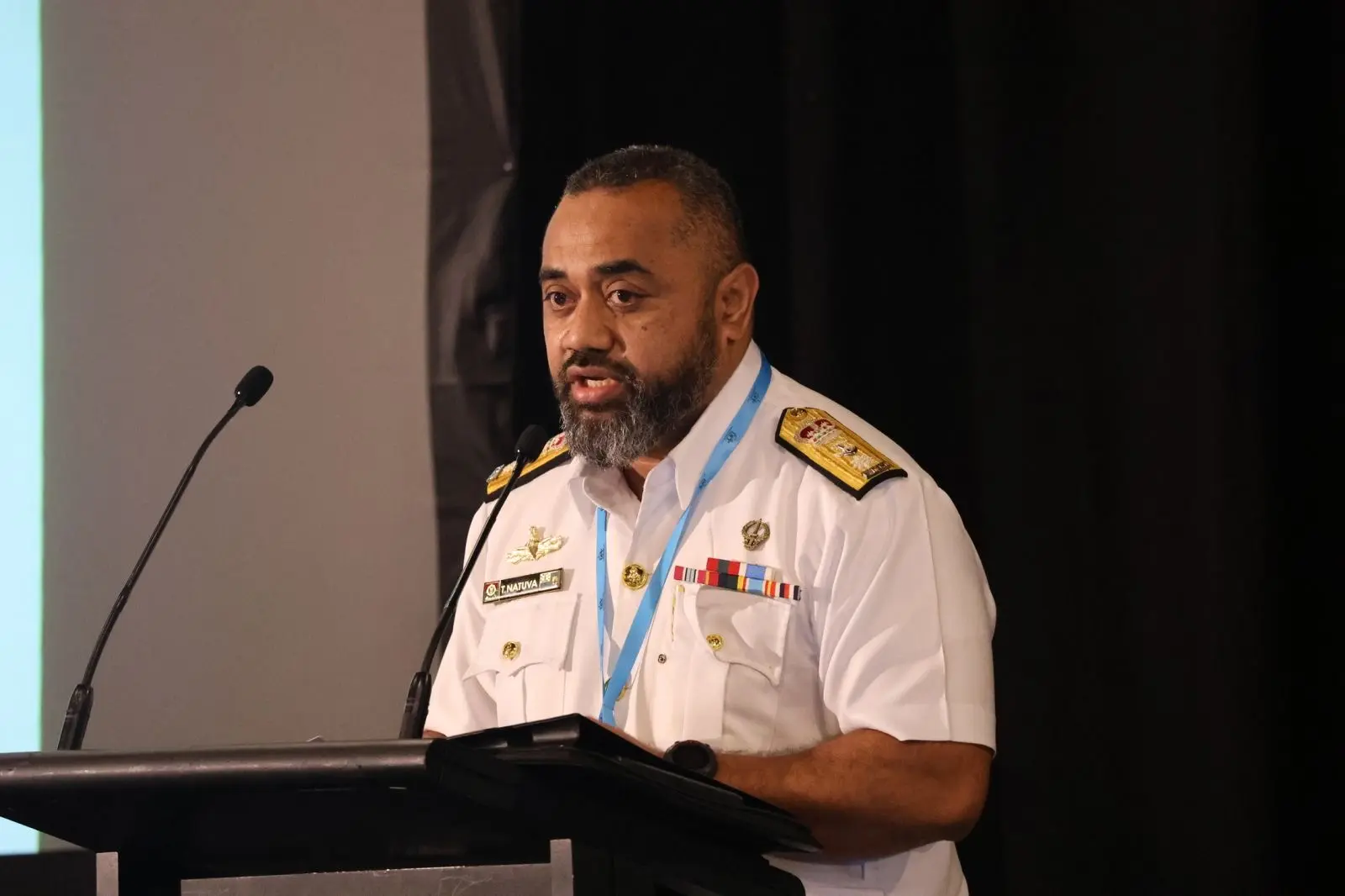
Republic of Fiji Military Forces Naval Division Commander Commodore Timoci Natuva addressing the ODPP annual conference at Shangri La Yanuca Island, Fiji in Sigatoka on November 20, 2026.
Photo: Talei Roko
The Republic of Fiji Military Forces (RFMF) Naval Division has observed emerging trafficking trends in the maritime domain.
This raises concerns about the continued use of Fiji’s maritime routes for illegal activities.
Navy Commander Commodore Timoci Natuva said forced labour aboard fishing vessels was the most direct maritime trafficking risk facing Fiji.
Related stories
“Warning signs include recruitment debt, withheld wages, substituted contracts, confiscated identity documents, excessive hours, time at sea, threats, restricted communication and inability to leave Fiji,” he said at the Office of the Director of Public Prosecutions’ annual conference on Friday.
“Fiji focus reporting identifies migrant fishers on both Fiji flag and foreign flag vessels as vulnerable. These signs can direct attention but it must be tested against reliable evidence and the application, applicable offence elements. Other risks may sit outside normal commercial patents.”
Commodore Natuva said exploitation was also associated with private yachts, tourist areas and fraudulent online recruitment, which could take place before a person arrived at a port or vessel.
“The first indication may be a worker asking for help during an inspection or during a boarding out at sea.”
He emphasised the need for boarding officers to remain alert and recognise signs associated with human trafficking.
“Trafficking can overlap with organised crime and financial offending. So maritime observation may need to be linked to recruitment, payment and movements, evidence gathered by other agencies.”
Commodore Natuva referred to the new Maritime Powers Act 2026, which provides a framework for maritime enforcement. He said the Act would address legal gaps that had previously hindered the Navy's work.
The Act gives the Navy and enforcement officers powers to board, search and seize vessels reasonably suspected of being involved in relevant offences, including human trafficking and other transnational crimes.