Permanent Secretaries face human rights performance checks
Mr Tagicakirewa said Permanent Secretaries would be required to demonstrate their commitment to improving public service standards through the new performance system.
Thursday 29 October 2026 | 08:00

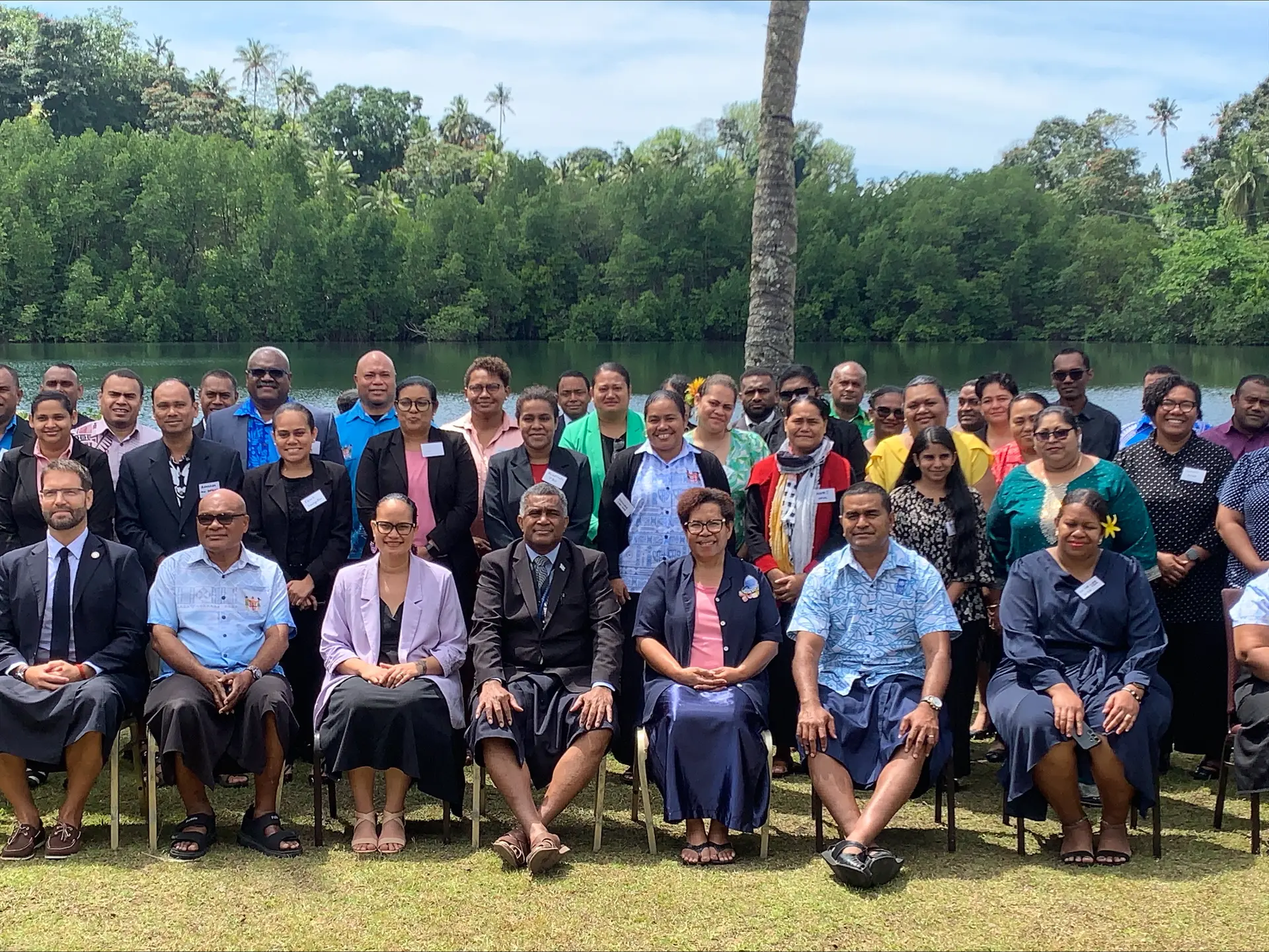
From left(sitting): Deputy Regional Representative at the UN Human Rights Pacific Mr. Sebastien Gillioz, Permanent Secretary for the Civil Service Pita Tagicakirewa, Director of Fiji Human Rights and Anti-Discrimination Commission Loukinikini Lewaravu Solicitor-General Ropate Green Lomavatu, Human Rights advocate and Commissioner for the Fiji Human Rights and Anti-Discrimination Commission Ms Alefina Vuki with participants during the Human Rights workshop at Novotel Convention Conference, Lami on October 28, 2026.
Photo: Milika Rabulu
Fiji's Permanent Secretaries will face greater scrutiny over human rights, discrimination and public service delivery under a new performance assessment system being introduced by the Government.
The Permanent Secretaries' Executive Development System (PSEDS) will assess senior civil servants on accountability, human rights, anti-discrimination and their efforts to improve staff capabilities and services delivered by their ministries.
Permanent Secretary for the Civil Service Pita Tagicakirewa outlined the initiative at a human rights workshop yesterday, attended by representatives from government ministries and departments.
Related stories
He said the system was intended to strengthen governance and ensure public servants delivered services that met expected standards.
“True measure of public service was not simply the policies developed or programmes delivered, but the impact they had on people’s lives”.
Mr Tagicakirewa said Permanent Secretaries would be required to demonstrate their commitment to improving public service standards through the new performance system.
The initiative follows an announcement by Prime Minister Sitiveni Rabuka that performance agreements would be introduced from the end of September.
Human rights in everyday decisions
Solicitor-General Ropate Green Lomavatu, who chairs the Government Human Rights Taskforce, said human rights commitments must produce practical improvements in people's lives rather than remain limited to legislation, policies and international reporting.
He said government decisions on funding, policy development and service delivery could either strengthen people's enjoyment of their rights or create barriers to accessing essential services.
Challenges such as discrimination, gender inequality, poverty, climate-related vulnerabilities, violence and the marginalisation of vulnerable groups required coordinated responses across government ministries and agencies.
Mr Lomavatu said the Government Human Rights Taskforce had contributed to Fiji's reporting under international human rights mechanisms, including the Universal Periodic Review, the Convention on the Rights of Persons with Disabilities and the Convention on the Elimination of All Forms of Discrimination against Women.
Work was also continuing on Fiji's reports under the Convention on the Rights of the Child and the International Convention on the Protection of the Rights of All Migrant Workers and Members of Their Families.
However, he stressed that the value of international reporting depended on whether recommendations influenced government planning, legislation, policies, resource allocation and public service delivery.
“I challenged workshop participants to assess whether government services were accessible to everyone”
He also called for officials to examine whether policies addressed the needs of vulnerable and marginalised communities and whether effective systems were in place to monitor progress and ensure accountability.
Measurable action expected
The workshop is expected to develop practical measures, including ministry human rights profiles, implementation metrics, institutional commitments and timelines.
These measures are intended to help translate human rights discussions into measurable improvements across Government.
Both speakers urged officials to move beyond awareness of human rights principles and incorporate them into everyday decision-making.
Mr Tagicakirewa said the workshop's success would ultimately depend on what participants implemented when they returned to their respective offices.