Proposed RFMF Bill aims to make military coups more difficult
RFMF officer says culture, training and civilian leadership are essential safeguards against future coups.
Friday 20 November 2026 | 15:30

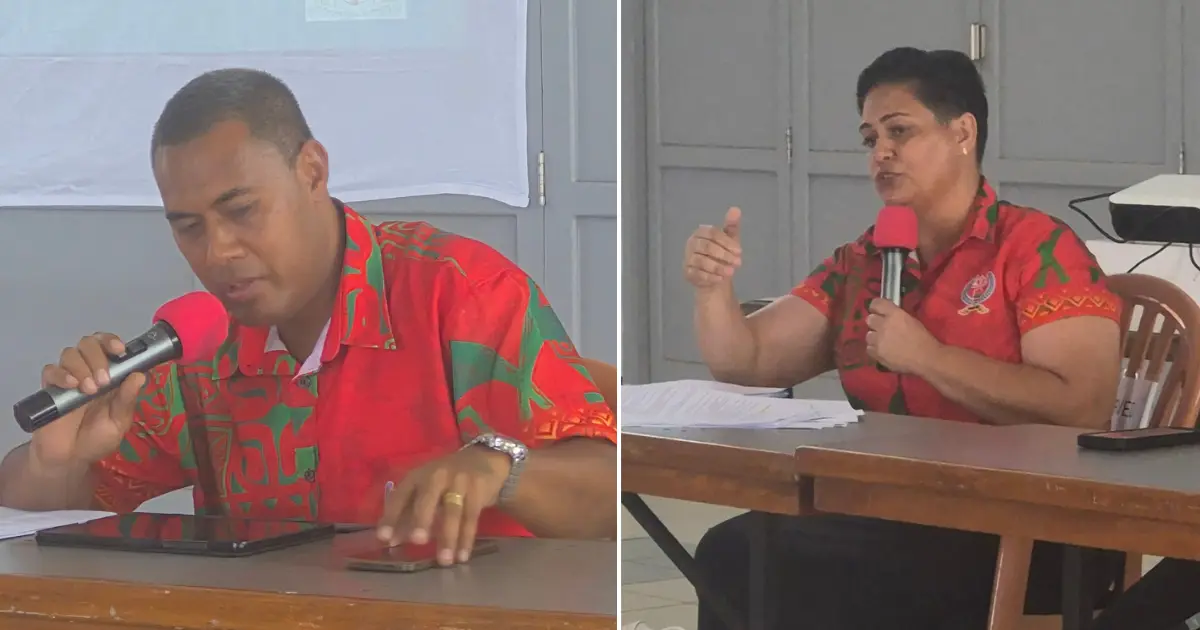
Lieutenant (Navy) Atunaisa Waqainabete and RFMF Legal Service senior legal officer Captain Stephanie Dunn.
Photos: Kaneta Naimatau
The proposed Republic of Fiji Military Forces Bill 2026 is intended to make it harder for the military to carry out a coup, but warned that legislation alone “cannot stop a coup”, says RFMF Lieutenant (Navy) Atunaisa Waqainabete.
His comments came as RFMF Major Jone Lesivakarua and Legal Service senior legal officer Captain Stephanie Dunn answered questions during a public consultation in Suva today.
Lt (Navy) Waqainabete said a change in culture, civilian leadership and professional training were also needed.
Related stories
“It requires culture. It requires civilian leadership. It requires professional training,” he said.
He said the laws were being reviewed to ensure the RFMF remained under civilian authority, as required by the Constitution.
The aim, he said, was “to make it harder for one to conduct a coup. Or for the RFMF to be engaged in carrying out a coup.”
Major Lesivakarua acknowledged that the military had been misused in the past.
“The risk is that the RFMF can be used or have been used before to advance political interests,” he said.
He said the proposed new Constitution also limited the RFMF's role to responding to external threats, with the military assisting civilian authorities.
“Intervene to assist. That is the word that I will emphasise,” he said.
Captain Dunn said the Constitution gave the RFMF a broad mandate, which the Bill sought to narrow by setting conditions for when soldiers could be deployed.
“In all instances, we are never the lead agency. We are simply there to support,” she said.
She said a requesting agency, such as the police, must seek military assistance.
“It doesn’t say minister. It doesn’t say a politician. It doesn’t say cabinet.”
The Commander can approve assistance that does not involve weapons, but Cabinet approval is required if soldiers need to carry arms.
A report is then submitted to Cabinet and the Prime Minister’s Office.