Savusavu weaver urges women to turn traditional skills into income
Veteran exhibitor teaches young girls to preserve traditional weaving practices for future generations.
Friday 20 November 2026 | 04:30
Updated 20 November 2026 | 16:34 FJT

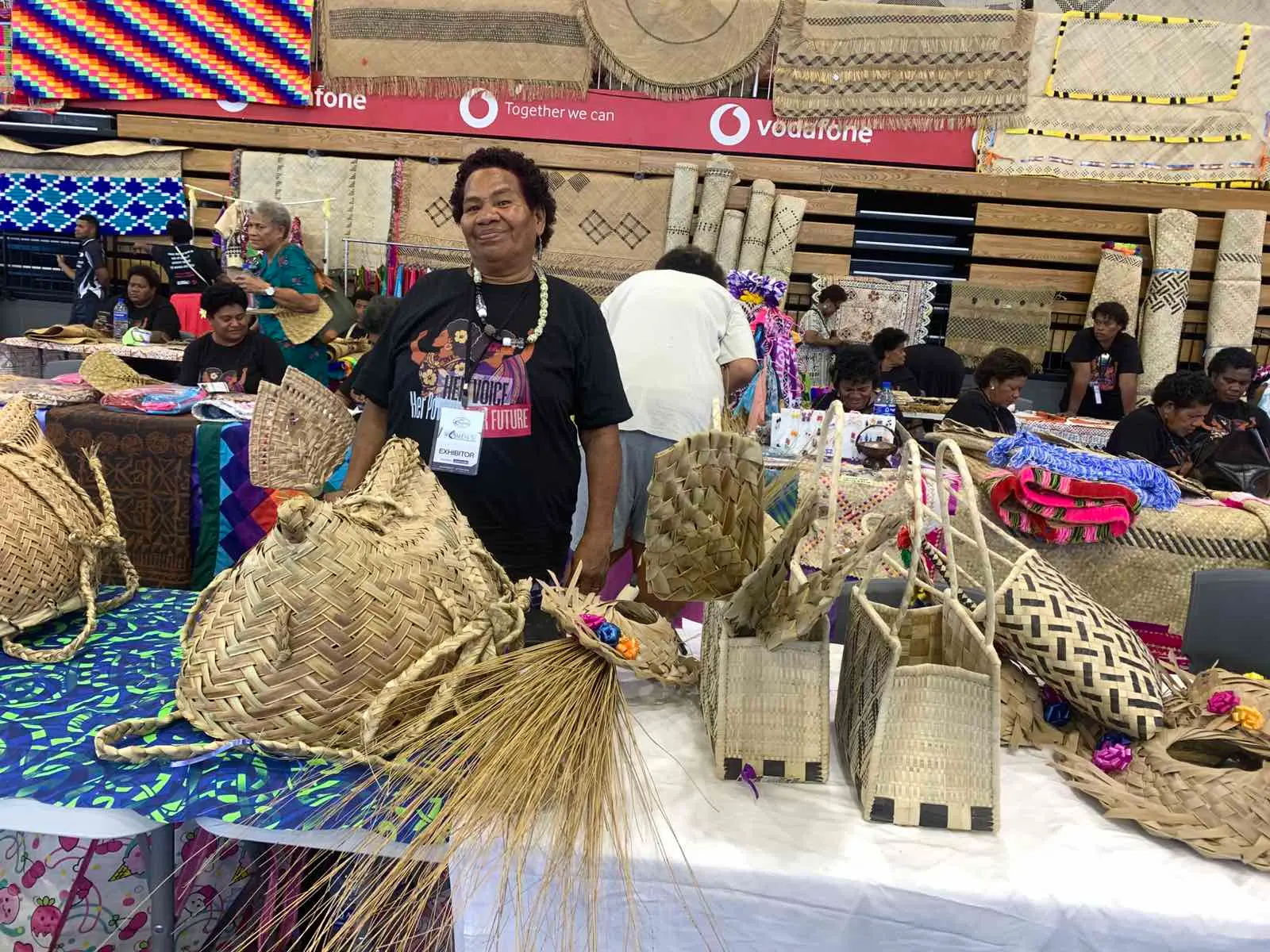
Keresi Sarasaraivalu at the 8th Fiji National Women’s Expo at the Vodafone Arena in Suva.
For Keresi Sarasaraivalu, weaving is more than a traditional skill passed down through generations. It is a way for women to earn an income, support their families and preserve their culture.
The woman from Wailevu, Savusavu, whose husband is from Urata Village, Wailevu East in Cakaudrove, began weaving when she married at the age of 20.
Since then, she has turned coconut leaves into fans, brooms and Fijian baskets, making weaving a source of income for her family.
Related stories
Now attending her fourth Fiji National Women’s Expo, Ms Sarasaraivalu is encouraging women in villages to spend less time on their phones, recognise the resources around them and use their traditional knowledge to become financially independent.
She said women did not have to wait for opportunities to come to them when the materials and skills needed to earn money were already within their reach.
“Most of the time we women need money, but we have the power to get it by using our traditional skills,” she said.
“For those of us staying in the village, coconut leaves and voivoi are free. We can make use of them to earn money. Try and go out and learn how to weave.”
Having attended expos in Nadi, Lautoka and Labasa, Ms Sarasaraivalu said this was her fourth time participating in Suva, where she continued to learn new skills and meet other women involved in traditional crafts.
She urged women in Wailevu and other communities not to limit participation to those who were regularly selected to attend the expo, saying every woman had the opportunity to take part and showcase her work.
However, running her weaving business has not always been easy, particularly when customers request items on credit and fail to pay after receiving their orders.
Ms Sarasaraivalu said she had become more cautious by asking customers to pay upfront before she began weaving, after being left disappointed by unpaid orders.
Despite the challenges, she remains committed to sharing her knowledge with younger generations, teaching primary school students, Girl Guides, Scouts and Pathfinder groups how to weave baskets, fans, hats and garlands.
She said teaching young girls was important because they would be responsible for carrying traditional weaving forward when older women were no longer around.
“Come and learn this because one day we will not be here, you people will replace us in the future,” she said.
For Ms Sarasaraivalu, the expo is not only a place to sell her crafts but also an opportunity to learn, share and remind women that the means to earn an income may already be growing around them.