The Bose Levu Vakaturaga Bill and the Intergenerational Vision: More Than Legal Recognition
Respecting tradition does not mean rejecting modern education. It means combining Vanua wisdom with constitutional and legal knowledge, economic understanding, financial literacy and good governance.
Sunday 04 October 2026 | 15:30
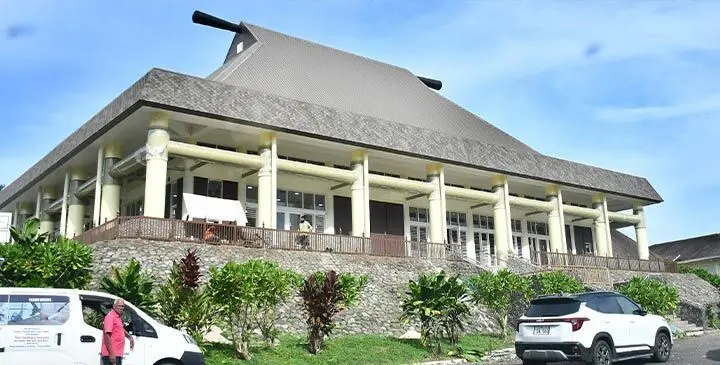
The unanimous passage of the BLV Bill in Parliament marks a significant moment for the iTaukei people. It is more than a legal milestone.
It is an opportunity to reflect on the role of the Bose Levu Vakaturaga in modern Fiji and the vision it must carry for generations yet to come.
In recent weeks, I have participated in conversations among fellow iTaukei—old schoolmates, former public servants and current leaders—about what the BLV should become now that it has its own legislative foundation.
These discussions have been thoughtful, sometimes cautious, but consistently grounded in a shared commitment to the Vanua.
The Post-Colonial Paradox
We meet at a time of paradox. Across many post-colonial societies, communities rooted in communal values and traditional hierarchies are being reshaped by cash economies, urban individualism, party politics and social media. The vocabulary changes; the tension remains.
In Fiji, we iTaukei face the same challenge. Vanua, veiwekani, veidokai, veilomani and solesolevaki coexist with aspirations for cars, houses, qualifications and social media followers.
Public discourse often rewards provocation over reflection, political loyalty over reason, and ridicule over respectful disagreement.
We aspire to modernity while risking the loss of the civility that gives our society its character. We speak of dignity while normalising humiliation. We celebrate individual success while becoming less tolerant of those who think differently or possess less.
This is the context in which the BLV must now find its place.
Autonomy with Accountability
The BLV Bill gives the Council corporate status, the ability to own property and manage its own affairs, and greater autonomy from direct party political influence.
The Chairman, Ratu Viliame Seruvakula, has clarified that the iTaukei Trust Fund is a statutory body, not taxpayer-funded, and that its financial affairs are subject to internal accountability and independent audit. That distinction matters.
But autonomy is not unaccountability. Independence must be real; accountability must be genuine. A binding code of conduct, financial transparency and effective mechanisms for addressing misconduct are not threats to chiefly authority. They protect its integrity.
Chiefly leadership is ultimately about service. A title without responsibility is merely status.
Educating Leaders for the Modern Vanua
If the BLV is to exercise genuine autonomy, it must understand the modern systems affecting the Vanua. A pilot group of young chiefs is already undergoing training at FNU, supported by the Turaga Roko Tui Bau and a team. This is a promising start.
Respecting tradition does not mean rejecting modern education. It means combining Vanua wisdom with constitutional and legal knowledge, economic understanding, financial literacy and good governance. The purpose is not to teach chiefs how to be chiefs, but to equip them to understand the legal, economic and financial environment in which the Vanua now operates.
The evolving curriculum seeks to bring modern knowledge and traditional wisdom together—not to displace tradition, but to strengthen it.
This is not a new idea. Our forefathers understood that the future of the Vanua depended on education. The BLV approved the school that became Queen Victoria School. Ratu Kadavulevu School grew from a Bose ni Yasana o Tailevu resolution. Adi Cakobau School followed a BLV recommendation. Ballentine Memorial School, Ratu Sukuna Memorial and Navuso Agricultural Institute reflected the same vision: education, self-reliance, practical skills, savings and leadership.
Our forebears invested in people before they could see the results. What happened to that vision, and how do we restore and strengthen it for the next generation?
These are questions the BLV must now answer.
The Watch and the Time
At the first meeting of the reconstituted BLV in Bau in 2023, I reflected that its removal in 2006 and absence from the 2013 Constitution had given chiefs time to reconsider their relationship with the vanua and lewenivanua. With the BLV restored, what is our vision? We agreed that our work and values must be intergenerational, serving future generations of iTaukei.
The reconstituted BLV includes many new members who bring education, international experience and modern knowledge alongside traditional wisdom. This makes a long-term vision essential. Its autonomy allows it to think beyond electoral cycles and plan across generations.
As the saying goes, "You have the watch, but we have the time." The watch measures minutes, government terms, news and electoral cycles. Our time encompasses generations, land, Vanua, ancestors and iTaukei yet unborn.
Government and modernity may hold the watch; tradition holds the longer memory. The BLV, drawing on both Vanua wisdom and modern knowledge, can help keep that longer horizon in view.
A Living Tradition
None of this means romanticising the past. Traditions have had exclusions, silences and injustices. Yet their enduring ideals—consultation, tolerance, hospitality and human dignity—remain relevant. Veidokai must shape public life. Veiwekani must transcend political differences. Solesolevaki must embody shared responsibility, not remain a slogan. Veilomani must measure our progress.
This is particularly important when considering women and younger generations.
Increasingly, educated iTaukei are asking difficult questions—not to reject the Vanua, but because they belong to it. They know its obligations, respect their chiefs and remain committed to their identity. They are not anti-chief; they are pro-Vanua.
Their question is whether the Vanua can make room for their voices.
Many educated iTaukei women speak of a painful contradiction. They love their identity and connection to the Vanua and they honour their chiefs. Yet they have also experienced traditional structures as limiting, discriminatory and patriarchal. Too often, they are expected to remain silent, even on matters directly affecting their lives.
Such experiences should not be dismissed as disloyalty. They deserve serious consideration if the Vanua is to retain the trust and confidence of its own daughters.
Respect cannot be a one-way street. Custom has always evolved. A living tradition is not one that never changes, but one that knows how to change without losing itself. Women's wisdom, experience and capabilities deserve more than acknowledgement; they deserve meaningful influence.
Democracy and the Vanua
This debate also invites us to reconsider how democracy is understood in Fiji.
Representative democracy gives individual citizens a voice through elections, and that principle remains important. But for iTaukei, collective identity, customary obligations and the authority of the Vanua are equally significant dimensions of social and political life.
These traditions should not automatically be treated as incompatible with democracy. Nor should customary authority be exempt from questions of accountability, representation and fairness. The challenge is to develop a constitutional arrangement in which these different sources of legitimacy can coexist and complement one another.
A Pasifika democracy would recognise that individuals have rights but also obligations; that communities matter; that indigenous identity is not merely cultural decoration; and that customary authority can have constitutional space while remaining accountable. It would allow Parliament to govern the nation while giving the Vanua a meaningful constitutional voice.
That is not a rejection of democracy. It is democracy adapted to the soil in which it is planted.
One Ship, Same Ocean
The unanimous passage of the BLV Bill is neither the end of the journey nor a reason to abandon scrutiny. It is an opportunity to build institutions that reflect our constitutional aspirations while respecting the country's distinctive cultural foundations.
Government has its electoral cycles. Parliament has its legislative programme. Civil society has its priorities. The Vanua carries responsibilities that extend beyond the political calendar, connecting the living with those who came before and those yet to come.
The task now is to ensure that restoration becomes reality: that the BLV is not merely recognised by the State, but remains rooted in the Vanua, accountable to the people it represents, and capable of exercising its responsibilities with genuine autonomy and wisdom.
The BLV is not the ship, nor is it the captain. It is one of many cabins aboard the same vessel. The State, the Vanua, chiefs, women, young people and elders each have their cabins and distinct responsibilities, yet all contribute to the safety and wellbeing of the whole. No cabin can claim the entire ship, and none can afford to ignore the others.
Same ocean. Same shore. Same storm. One ship.
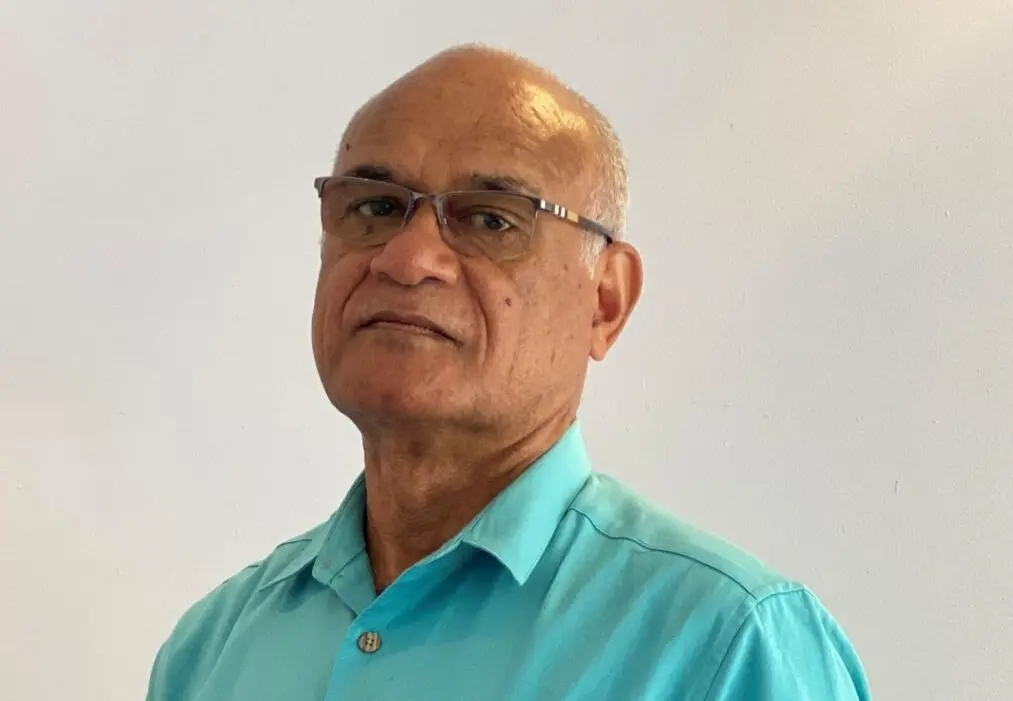
Ro Naulu is a current member of the Bose Levu Vakaturaga.